



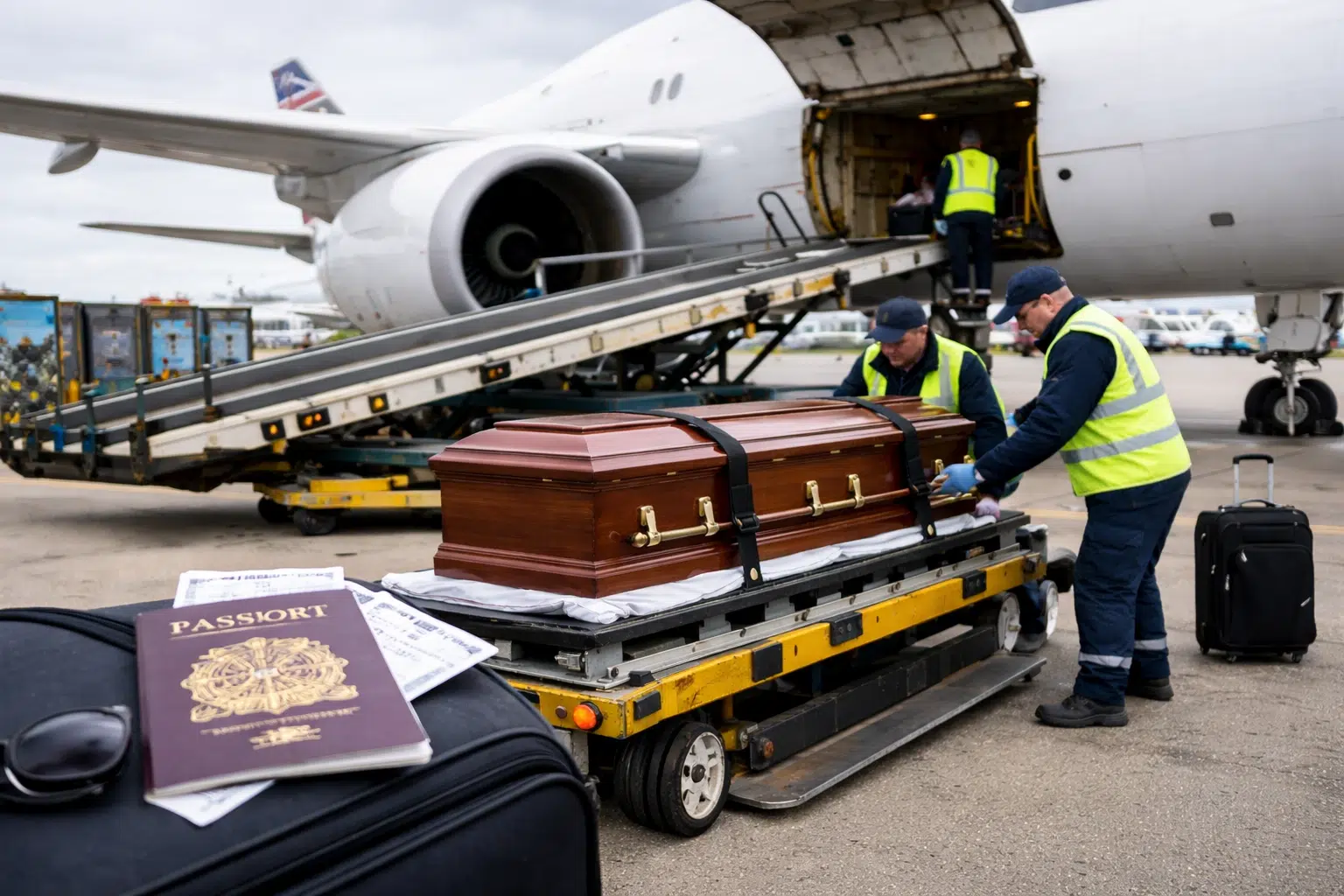
Every year, millions of international visitors travel to the United Kingdom to explore its history, culture, and iconic landmarks. While the vast majority return home safely, the unexpected death of a tourist on UK soil is a reality that families and consulates must sometimes face. Navigating a foreign country’s legal and administrative systems while grieving is an immense challenge. This guide explains, step by step, what happens when a tourist dies in the UK and what families need to know.
Step 1: Reporting the Death
The first legal obligation when a person dies in the UK is to report the death to the appropriate authorities. If the death occurs in a hospital, medical staff will take care of this immediately. If it happens in a public place, hotel, or private residence, the police must be contacted straightaway. Emergency services will secure the scene and, where necessary, a paramedic or doctor will formally pronounce the person deceased.
It is important that no one moves the body before authorities arrive, especially if the cause of death is unclear. Any delay in reporting can complicate the administrative process that follows.
Step 2: Coroner Investigation
In England, Wales, and Northern Ireland, if the cause of death is sudden, unexplained, or the person died without recent medical attention, the case is referred to the local coroner. Scotland operates under a slightly different system, using a Procurator Fiscal instead of a coroner, but the process serves the same purpose: to establish the cause and circumstances of death.
To ascertain the exact cause of death, the coroner may conduct a post-mortem examination. In more complex cases, an inquest, which is a formal legal inquiry, may be opened. This can take weeks or even months to conclude, particularly if the circumstances are unusual or criminal activity is suspected. Families should be aware that the body cannot be released, or repatriation arranged, until the coroner is satisfied and grants authorization.
Step 3: Registering the Death
Once the cause of death has been established, the death must be formally registered. In England and Wales, registration must happen within five days of receiving the Medical Certificate of Cause of Death (MCCD). The registration is handled at the local Register Office in the area where the death occurred.
A certified UK death certificate is then issued. Families will typically need multiple certified copies, as they are required for insurance claims, repatriation paperwork, legal proceedings in the home country, and estate matters. Each certified copy costs approximately 12.50 pounds in England and Wales.
Step 4: Notifying the Relevant Consulate or Embassy
Once the death has been reported, the deceased’s home country consulate or embassy in the UK should be contacted as soon as possible. Embassy staff can offer practical support, help families understand local legal requirements, liaise with UK authorities on their behalf, and assist in gathering the documentation required for repatriation.
Different countries have different requirements for receiving human remains, and the embassy is the best starting point for understanding what will be needed on both sides.
Step 5: Contacting the Travel Insurer
If the deceased had travel insurance, the insurer should be notified promptly. Many travel insurance policies cover the cost of repatriation, including the preparation and transportation of the body. Failing to notify the insurer in a timely manner can result in claims being rejected, so this step should not be delayed.
Families should gather the policy details, certificate of death, and any medical reports as early as possible to support their claim. If no travel insurance was in place, the full cost of repatriation falls to the family, which can run into several thousand pounds depending on the destination country.
Step 6: Preparing the Body for Repatriation
International repatriation of a deceased person involves a tightly regulated set of procedures. In most cases, the body must be embalmed by a licensed professional to preserve it during transportation. A hermetically sealed zinc-lined coffin is often required, particularly for air travel, to comply with international health and aviation standards.
The repatriation company or funeral director handling the transfer will obtain the necessary permits, including a freedom from infection certificate and the coroner’s authorization for removal. They will also coordinate with airlines, handle customs documentation on both ends of the journey, and liaise with the receiving funeral director in the home country.
Step 7: Arranging the Repatriation
Repatriation is logistically complex and time-sensitive. Once the coroner releases the body and all documentation is in order, a specialist repatriation company arranges transportation, typically by air. The timeline from death to repatriation varies considerably. Straightforward cases where the cause of death is clear and no inquest is needed can be resolved within a week or two. Where an inquest is required, the process can take considerably longer, and the family may need to make interim decisions about storing the body.
Families based overseas do not typically need to travel to the UK to arrange repatriation. A reputable repatriation service can handle everything remotely, keeping the family informed at every stage and ensuring their loved one is returned home with dignity.
Step 8: The Costs Involved
The financial burden of a death abroad can be significant. Costs include the death certificate, post-mortem if required, embalming, the coffin, documentation, UK funeral director fees, and the flight itself. Without insurance, total costs can easily exceed 5,000 to 10,000 pounds depending on the destination. Families should seek an itemized quote from their repatriation provider so they understand exactly what is covered.
A Word for Families
Losing a loved one is devastating under any circumstances. Losing one in a foreign country, while navigating unfamiliar legal systems and logistics from thousands of miles away, is an especially painful and disorienting experience. No family should have to face this alone. Specialist repatriation services exist precisely to take this burden off grieving families, so they can focus on supporting one another.
Need Help Repatriating a Loved One from the UK?
Harmony International is a specialist international repatriation service with offices across the world. Their experienced team handles everything from documentation and embalming to flights and coordination with local funeral directors, every step of the way. Available 24 hours a day, 7 days a week, Harmony International supports families through one of life’s most difficult moments with compassion and professionalism.
Read more in our Guide to International Repatriation Services.
Pages You Might Like:
UK repatriation services, Destinations We Repatriate, Into the UK, What to do when someone dies, Coffins we offer
 Call us
 Email us