



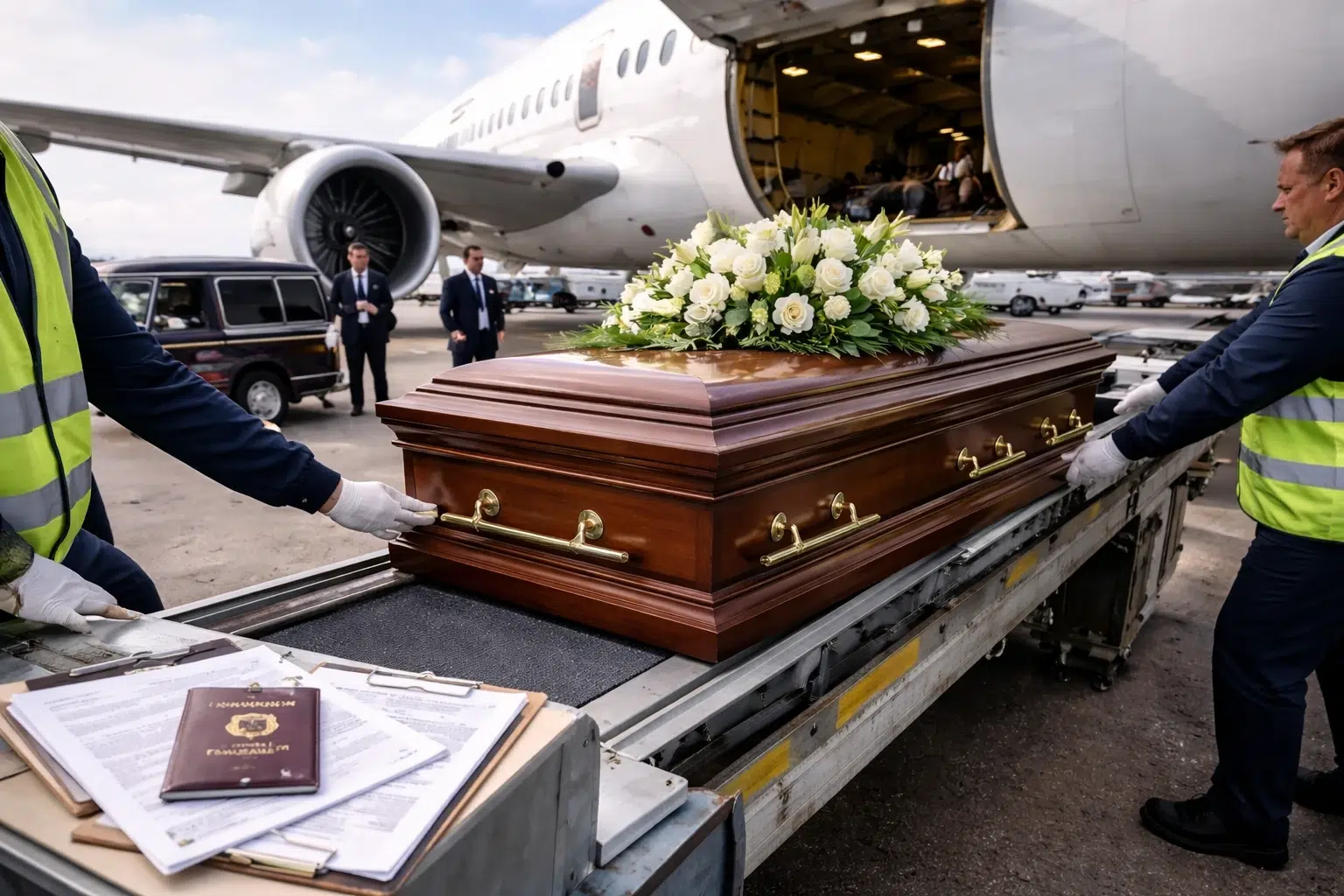
The transportation of human remains across international borders is a sensitive and highly regulated process. Families frequently request that a deceased loved one be returned to their home country for burial or cremation. However, transporting human remains internationally involves navigating a complex web of international conventions, aviation rules, public health regulations, and country-specific laws.
Because multiple authorities, such as airlines, health departments, consulates, and customs agencies, are involved, strict legal frameworks exist to ensure that human remains are handled safely, respectfully, and in compliance with global health standards. Understanding these laws and regulations is essential for funeral homes, repatriation specialists, and families dealing with the loss of a loved one abroad.
This article explores the major international legal frameworks, aviation standards, documentation requirements, and health regulations that govern the transportation of human remains worldwide.
Why Regulations Are Necessary
Transporting human remains internationally is not just a logistical process; it also involves public health, cultural sensitivity, and aviation safety considerations. Governments enforce strict guidelines to prevent the spread of infectious diseases, ensure proper identification of the deceased, and maintain dignity throughout the transportation process.
Human remains transported by air are classified as special cargo rather than passengers. This classification places them under cargo handling rules that involve specialized packaging, labeling, and documentation procedures.
Furthermore, the transportation process typically involves several stakeholders, including:
- Funeral directors
- Airlines and cargo operators
- Embassies and consulates
- Public health authorities
- Customs and immigration officials
Because different countries maintain different legal requirements, international guidelines help standardize procedures as much as possible.
Key International Legal Frameworks
1. The Agreement on the Transfer of Corpses (1973)
One of the most significant international agreements governing the cross-border transport of human remains is the 1973 Agreement on the Transfer of Corpses.
This treaty was developed by European states to simplify and standardize the international transportation of deceased individuals. The agreement requires that human remains transported across borders be accompanied by a “laissez-passer for a corpse”, an official document issued by the country where the death occurred.
The agreement also establishes several essential requirements:
- The body must be transported in a coffin that is hermetically sealed.
- The coffin may contain only the deceased and personal effects intended for burial.
- If death was caused by an infectious disease, the body must be wrapped in antiseptic-treated material.
Although initially designed for European countries, the treaty has influenced international best practices for transporting human remains worldwide.
Aviation Regulations and Airline Standards
International Air Transport Association (IATA)
Air transport is the most common method for repatriating human remains across long distances. As a result, aviation bodies play a critical role in regulating the process.
The International Air Transport Association (IATA) provides operational guidelines through its Compassionate Transportation Manual (CTM). This manual outlines procedures for airlines, funeral directors, and cargo handlers regarding the safe handling and shipment of human remains.
Key aspects of IATA regulations include:
- Proper packaging and leak-proof containers
- Specific labeling and documentation requirements
- Special handling procedures at airports
- Separation of human remains from other cargo such as food or animals
These standards ensure that remains are transported safely while maintaining dignity and compliance with international aviation protocols.
International Civil Aviation Organization (ICAO)
The International Civil Aviation Organization (ICAO) also provides guidance on the transportation of human remains. ICAO standards focus on facilitating safe cross-border aviation operations while addressing public health risks.
For example, during global health crises such as pandemics, ICAO works with organizations like the World Health Organization (WHO) to issue guidance on the safe transport of remains when infectious diseases may be involved.
These guidelines help airlines and governments manage risk while ensuring the repatriation process continues even during emergencies.
Documentation Requirements
One of the most important aspects of international human remains transport is proper documentation. Requirements may vary by country, but the following documents are generally required:
1. Death Certificate
A certified death certificate confirms the identity of the deceased and the cause of death.
2. Embalming Certificate
Many countries require proof that the body has been embalmed to prevent decomposition during transport.
3. Consular Mortuary Certificate
Embassies or consulates often issue a certificate authorizing the transportation of remains across international borders.
4. Laissez-Passer for a Corpse
Some countries require this official document confirming that the remains are authorized for international transport.
5. Sealing Certificate
This verifies that the coffin or container has been sealed according to regulatory requirements.
Consular authorities typically review these documents before allowing the remains to be transported internationally.
Packaging and Coffin Requirements
The physical container used to transport human remains must meet strict standards.
International regulations usually require:
- Leak-proof or hermetically sealed coffins
- Metal inner liners or zinc containers
- Absorbent materials to prevent fluid leakage
- Secure outer wooden cases for transportation
These requirements protect airline personnel, airport staff, and the public while ensuring that the remains are transported respectfully.
Public Health and Safety Regulations
Public health regulations play a crucial role in the international transport of human remains. Authorities must ensure that the transportation process does not pose any health risks.
In many countries, health departments require advance notification before the arrival of human remains. For example, airport health authorities may require 48-hour prior notice so they can prepare for inspection and clearance.
If the deceased died from an infectious disease, additional precautions may be required, such as:
- Special embalming procedures
- Sealed body bags
- Disinfection protocols
- Restrictions on transport methods
These measures protect public health while still allowing families to repatriate their loved ones.
Country-Specific Laws and Customs Regulations
While international agreements provide a framework, individual countries ultimately control their own import and export regulations for human remains.
Some common variations include:
- Mandatory cremation before transport
- Restrictions on transporting remains during certain health emergencies
- Specific coffin or container requirements
- Cultural or religious documentation requirements
Because of these differences, repatriation can quickly become complicated if families attempt to handle the process alone.
Professional repatriation services typically coordinate with local authorities, embassies, airlines, and funeral homes to ensure all legal requirements are met.
Challenges in Global Repatriation
Despite established regulations, transporting human remains internationally remains complex due to:
- Differences in legal requirements between countries
- Language barriers and documentation issues
- Airline restrictions and cargo policies
- Cultural and religious considerations
These challenges often make professional assistance essential to avoid delays or legal complications.
Specialized repatriation providers have the expertise and international networks needed to navigate these regulations efficiently and compassionately.
The Role of Professional Repatriation Services
Handling the transportation of human remains requires not only legal compliance but also empathy and sensitivity. Families grieving the loss of a loved one often find the administrative process overwhelming.
Professional repatriation services coordinate every step of the process, including:
- Documentation and consular approvals
- Embalming and coffin preparation
- Airline cargo bookings
- Customs clearance
- Transportation to the final resting place
By managing these complex logistics, these services ensure that the deceased are transported with dignity while reducing stress for grieving families.
Conclusion
The international transport of human remains is governed by a network of treaties, aviation standards, public health regulations, and national laws. The complexity of international regulations means that navigating the process without expert guidance can be difficult and emotionally taxing for families.
With offices across the world, Harmony International has extensive experience assisting families, friends, and communities in repatriating loved ones to and from every corner of the globe. Their compassionate team manages every detail of the repatriation process, ensuring compliance with international laws while helping families reconnect with their loved ones and bring them home with dignity.
Read more in our Guide to International Repatriation Services.
Pages You Might Like:
UK repatriation services, Destinations We Repatriate, Into the UK, What to do when someone dies, Coffins we offer
 Call us
 Email us