



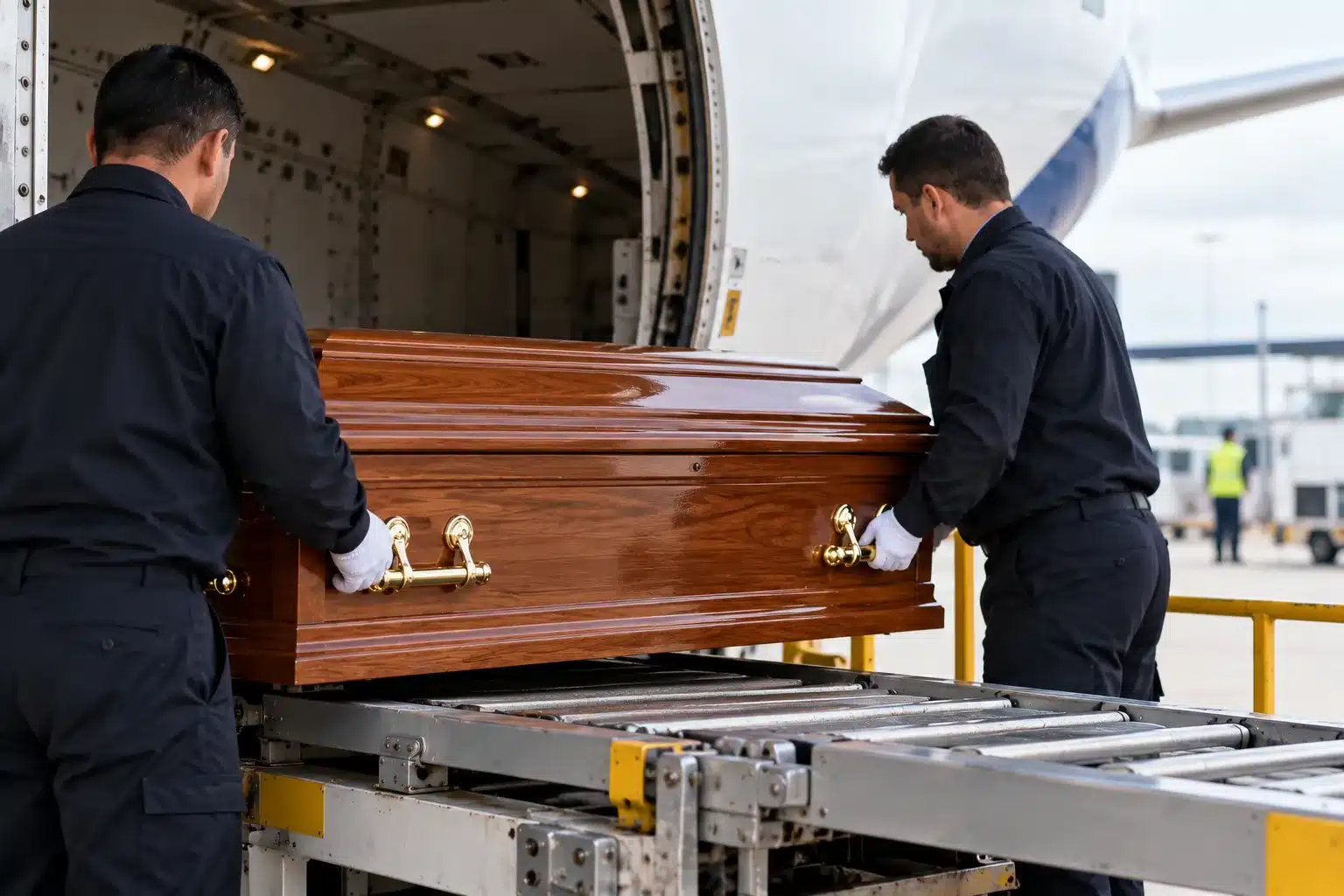
In most cases, yes, a personal or custom-made coffin can be used for international repatriation, but only if it can be adapted to meet hermetic sealing requirements and airline cargo standards. It is never a simple case of choosing any coffin and booking a flight. The coffin must be capable of being zinc lined or cad-sealed, strong enough to withstand cargo handling, correctly sized for the aircraft hold, and compliant with the destination country’s specific material rules. This guide explains exactly what determines whether a family’s own coffin can be used, why most repatriations still use a standard provider coffin, and how to explore this option properly if it matters to your family.
The Short Answer: Yes, With Conditions
A custom-made or personally sourced coffin is not automatically ruled out for repatriation, but it has to pass the same regulatory tests as any other coffin used for international transport. The deciding factor is never sentimental value or appearance. It is whether the coffin can be made completely airtight, whether its construction can safely carry the combined weight of the body and any transit crating, and whether its materials satisfy the specific rules of the country receiving the remains. A funeral director or repatriation specialist will need to inspect the coffin before any decision is confirmed.
What Actually Determines Whether a Personal Coffin Can Be Used
Several practical and regulatory factors decide whether a family’s own or custom-built coffin is suitable for the journey.
- It must be able to be fitted with a zinc lining or cad seal to achieve the required hermetic seal.
- It must meet International Air Transport Association structural and dimensional standards for cargo handling.
- It must comply with the destination country’s specific material requirements, since some countries only permit solid wood.
- It must be inspected and approved by an embalmer or funeral director before embalming and sealing begins.
- It must fit within the size and weight limits set by the specific airline handling the human remains cargo.
Why Most Repatriations Use a Standard Provider Coffin Instead
In practice, the large majority of repatriations use a coffin supplied by the funeral director rather than a personal or custom-made one, and this comes down to timing and certainty rather than preference. Standard repatriation coffins are pre-approved, already correctly sized, and can be zinc lined or cad-sealed quickly because the funeral director works with them regularly. A custom or personal coffin often needs to be assessed, sometimes modified, and in some cases rejected if its construction cannot safely hold a hermetic seal, which can add days to an already time sensitive process. Families under pressure to keep the timeline as short as possible, particularly for religious reasons, often find the standard route is simply more reliable.
When a Custom or Personal Coffin Works Well
There are situations where using a personal or custom coffin is genuinely practical rather than complicated. A simple, plain, solid wooden coffin built to religious or cultural specifications, such as those used in some Islamic and Jewish traditions, is often easier to adapt with a zinc liner than an elaborate custom design, since the construction is already close to what most countries require. Another common and often overlooked option is to use a compliant zinc lined transit coffin purely for the flight, then transfer the deceased into the family’s chosen personal coffin once the body arrives at the destination and has cleared customs, provided local regulations and timing allow for this.
Steps to Take If You Want to Use a Personal or Custom Coffin
- Raise the request with your funeral director or repatriation specialist as early as possible in the process.
- Confirm the destination country’s specific material and construction rules directly with its embassy or consulate.
- Arrange for the coffin to be inspected before embalming and sealing work is scheduled to begin.
- Budget for the cost of adding a zinc lining or cad seal if the coffin does not already include one.
- Confirm the airline handling the flight will accept the coffin’s exact size, weight, and construction.
- Ask about a standard coffin as a backup option in case the personal coffin cannot be approved in time.
Cost and Timing Implications
Using a personal or custom-made coffin can sometimes cost more than a standard repatriation coffin, particularly if it requires bespoke zinc lining work or additional structural reinforcement to meet cargo handling standards. It can also add time to the process, since inspection and adaptation happen before embalming can be finalised. Families who want to use a specific coffin should factor this into their overall timeline expectations from the outset, rather than assuming it will not affect the schedule.
Getting the Right Advice Before You Decide
Because coffin approval sits at the intersection of airline rules, destination country law, and practical funeral logistics, it is worth getting expert advice before committing to a personal or custom coffin. Harmony International assesses coffin options individually for every repatriation case, advising families honestly on whether a personal coffin can be adapted or whether a standard compliant coffin is the safer choice. Their guide on wood versus metal coffins for repatriation explains the practical differences in more detail, and their full coffin requirements page sets out what is available as standard.
Frequently Asked Questions
Can you use a custom-made coffin for international repatriation?
Yes, provided it can be fitted with a zinc lining or cad seal and meets the destination country’s material and airline cargo requirements.
Does a personal coffin still need to be zinc lined?
Yes, almost every country and airline requires a hermetically sealed coffin for international transport, regardless of who supplied or built it.
Can I supply my own coffin for burial at the destination instead?
Yes, a common approach is to use a compliant transit coffin for the flight, then transfer the deceased into the family’s chosen coffin after arrival.
Will airlines reject a non-standard coffin?
Airlines can refuse a coffin that does not meet their size, weight, or structural requirements, so approval should be confirmed before booking.
Does every country accept the same coffin materials?
No, material rules vary by destination country, and some, such as Italy, specifically require a solid wooden casket rather than other materials.
Who decides whether a personal coffin can be used?
The funeral director or repatriation specialist makes this assessment, usually in consultation with the embalmer and the destination country’s embassy. Harmony International can advise on this directly for your specific case.
 Call us
 Email us