



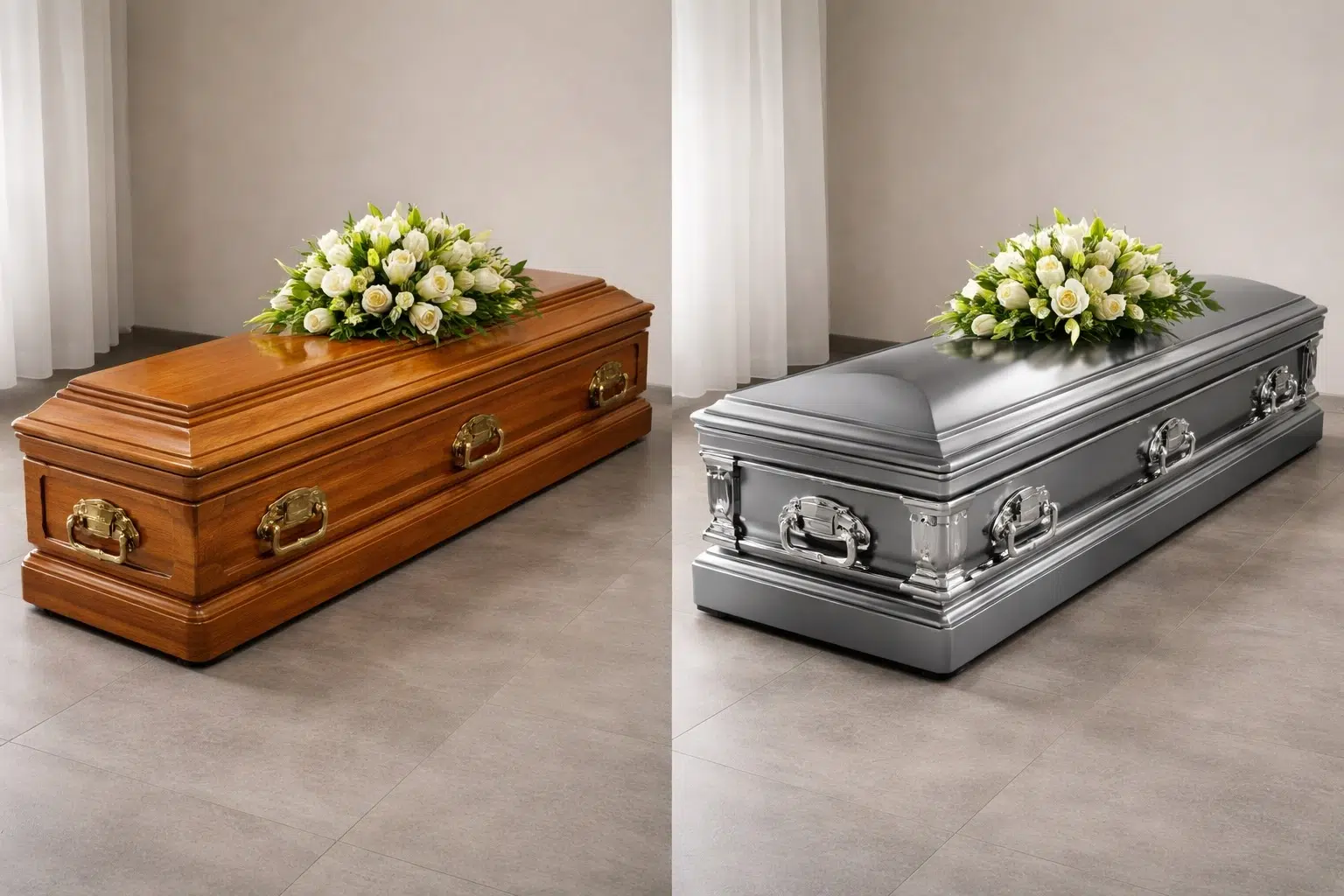
When a loved one passes away abroad, families are instantly confronted with the question of bringing the person back home. In the midst of grief, navigating the legal, logistical, and emotional complexity of international repatriation can feel overwhelming. One of the earliest and most consequential decisions in this process is the choice of coffin or casket: wood or metal?
This decision is not simply a matter of aesthetics or budget. The type of coffin chosen directly affects whether remains comply with international aviation regulations, whether the choice aligns with religious and cultural requirements, how much the journey will cost, and how smoothly the repatriation process unfolds from origin country to destination.
This guide provides an in-depth, factual, and compassionate breakdown of wood versus metal coffins specifically in the context of repatriation, helping families make an informed and dignified decision at the most difficult time of their lives.
Understanding Repatriation
Repatriation is the process of returning the remains of a deceased person to their home country or the country of their family’s choice. It is a deeply personal act and, in many communities, an essential obligation. It is also a highly regulated process governed by international agreements, national laws, and airline standards.
Air transport is the most commonly used method for international repatriation. IATA publishes the Compassionate Transportation Manual (CTM), which is updated annually and sets global standards for airlines and freight forwarders in the handling of human remains.
Repatriation involves multiple stakeholders: funeral directors in the country of death, embassies and consulates, airlines, customs authorities, and receiving funeral directors in the destination country. Each of these stakeholders has requirements, and the coffin is at the centre of many of them.
The key documents typically required include:
- A certified death certificate
- An embalming certificate (or alternative preservation documentation)
- A coffin sealing certificate
- An export authorisation from local authorities
- A consular letter or laissez-passer
- A freedom from infection certificate where applicable
The choice of coffin type, wood or metal, affects several of these requirements and must be considered carefully.
The Core Requirement: Hermetic Sealing
Before comparing wood and metal as materials, it is essential to understand the single most important requirement that applies to any coffin used for air repatriation: hermetic sealing.
A coffin used for international transport by air must be hermetically sealed, meaning it must be completely airtight to prevent the escape of fluids or odours during transit.
This requirement is enshrined in international aviation standards. As noted by IATA and its Compassionate Transportation Manual, the packaging of human remains must comply with strict guidelines to ensure the safety and dignity of the deceased during transport.
How wood and metal coffins meet this requirement differs significantly, and this is where the first major distinction between the two materials becomes apparent.
- How Wood Coffins Achieve Hermetic Sealing
Wood is a natural, porous material. By itself, a wooden coffin cannot achieve the airtight seal required for air transport. To meet international requirements, wooden coffins must be zinc lined, meaning a galvanised zinc metal sheet is fitted inside the coffin and then hermetically sealed, typically by welding, to create an airtight inner container.
There are two primary methods used:
Zinc Lining (full sealing): The zinc insert is permanently welded shut once the body is placed inside. This fully meets airline regulations but means the coffin cannot be easily reopened at the destination.
Zinc Cad-Seal: An alternative method that uses a cadmium seal to meet airline regulations while allowing the funeral director at the destination to remove the seal so the coffin can be used for the funeral service. This is popular for repatriations where the same coffin will be used for burial or viewing at home.
Most repatriation specialists include a zinc-lined wooden coffin as standard in their quotations, making this the most common and accessible option for families.
- How Metal Caskets Achieve Hermetic Sealing
Most metal caskets are designed with hermetic sealing as a built-in feature. Metal caskets often come with a rubber gasket seal across the lid, which creates an airtight closure that prevents outside elements from entering and internal elements from escaping.
However, there is an important technical consideration for air transport: because metal caskets are already pressure-sealed, changes in cabin pressure at altitude can create issues. Metal caskets must not be fully hermetically sealed during flight in the same way as zinc-lined coffins, as pressure differentials can cause structural problems. For this reason, some metal caskets used for air repatriation are designed to allow gas to escape while preventing fluid leakage.
If a metal casket cannot be hermetically sealed on its own, the same zinc cad-seal system used for wooden coffins can be applied to the metal casket to ensure full compliance with airline regulations.
Comparing Wood and Metal
- Weight and Logistics
Weight is a critical consideration for air freight, as airlines charge based on the weight and dimensions of cargo. Metal caskets are significantly heavier than wooden coffins, and heavier premium metals such as bronze and copper can add substantially to the overall weight.
- Cost
The cost depends on material, craftsmanship, and geographic location. Air freight costs, which are influenced by weight, will differ between wood and metal options. For families seeking a dignified but cost-conscious option, a zinc-lined wooden coffin almost always represents the more economical choice.
- Durability and Protection in Transit
Repatriated remains may travel thousands of miles, passing through multiple airports, cargo handling facilities, and customs checkpoints. The physical durability of the coffin matters.
Metal caskets are widely recognised for their strength and structural integrity. They resist crushing, impact, and the rigours of cargo handling. Metal caskets offer greater protection from external physical forces compared to wooden alternatives.
High-quality wooden coffins, particularly those made from solid hardwoods such as oak or mahogany, are also sturdy and designed to withstand the demands of air transport. However, they may be more susceptible to damage from rough handling or moisture compared to steel or bronze caskets.
For very long-haul repatriations or routes with multiple transits, some families and repatriation professionals prefer metal caskets for the added peace of mind their structural resilience provides.
- Country-Specific Regulations
One of the most important factors in choosing between wood and metal for repatriation is the legal requirement of the destination country. Regulations vary significantly. Some countries have very specific coffin requirements.
Families and repatriation professionals must always research and verify the specific requirements of the destination country before selecting a coffin. A coffin that is acceptable in one country may be non-compliant in another.
- Appearance and Aesthetics
While practicality and compliance must take priority in repatriation decisions, the appearance of the coffin is also meaningful to many families, particularly when a viewing or funeral service will take place after arrival.
Wood coffins offer a warm, natural aesthetic that many families find comforting and traditional. The natural grain of wood provides an elegant, organic appearance.
Metal caskets, on the other hand, offer a wider range of colours and finishes, from high-gloss painted steel to brushed stainless, copper tones, and the deep lustre of bronze.
Side-by-Side Comparison Table
| Factor | Wood Coffin | Metal Casket | Verdict |
| Hermetic Sealing | Requires zinc lining | Usually built-in | Metal (easier) |
| Weight | Lighter | Heavier | Wood |
| Cost | Lower baseline | Higher baseline | Wood (budget) |
| Religious Suitability | Jewish, Muslim, most faiths | Catholic, secular | Depends on faith |
| Country-Specific Rules | Accepted widely (zinc-lined) | Accepted widely | Both accepted |
| Cremation-Friendly | Yes | No | Wood |
| Eco-Friendliness | Better (biodegrades) | Slower decomposition | Wood |
| Durability in Transit | Good (when zinc-lined) | Excellent | Metal |
| Aesthetic Options | Warm, natural look | Wide color range | Personal choice |
Religious and Cultural Considerations
For many families, the choice of coffin material is not primarily a practical decision. It is a deeply personal one rooted in faith, culture, and tradition. Understanding the religious dimensions of coffin selection is essential to making a choice that honours the deceased with full dignity.
- Judaism
Jewish law has clear and longstanding requirements regarding burial. Judaism prohibits embalming and requires burial in a simple wooden coffin.
The use of a plain, untreated wooden casket without metal components is strongly preferred, reflecting the principle that the body should return naturally to the earth. Metal caskets are generally incompatible with Orthodox Jewish burial customs.
- Islam
Islamic burial customs call for the body to be washed, wrapped in a white shroud, and buried as quickly as possible, ideally within 24 hours of death. Where a casket is legally required, Islam prescribes a simple, unadorned wooden coffin without metal parts, closely aligned with the principle of returning the body to the earth simply and naturally.
Cremation is prohibited in Islam. For Muslim repatriations, a plain wooden coffin that meets transport regulations while respecting religious requirements is the standard approach.
- Christianity
Christian traditions vary widely. Catholic funerals accept both wooden and metal caskets, and many Catholic communities favour metal caskets for their durability and polished appearance. Protestant denominations are similarly flexible. Both wood and metal are acceptable for Christian repatriations, allowing families to choose based on personal preference and budget.
- Hinduism and Sikhism
Hinduism strongly favours cremation, viewing it as a means of releasing the soul and aiding its journey toward liberation (moksha). If a coffin is used prior to cremation, it should be simple and combustible, meaning wood is the only appropriate choice. Metal caskets cannot be cremated.
For Hindu families repatriating loved ones to India or elsewhere for cremation, a wooden coffin that meets transport requirements and can subsequently be used in the cremation process is essential.
- Cultural Traditions
Beyond formal religious requirements, cultural preferences also play a significant role. Chinese and Vietnamese families often prefer high-quality hardwood caskets in mahogany or cherry wood. Many African communities favour ornate, personalised caskets that reflect the personality and achievements of the deceased. Latin American families may choose caskets with religious iconography. These cultural preferences must be balanced with compliance requirements.
Environmental Considerations
As environmental awareness grows, more families are considering the ecological impact of their choices, even in the context of repatriation.
Wooden coffins biodegrade naturally over time, returning to the earth without leaving long-lasting materials in the ground. Sustainably sourced wooden coffins represent an environmentally responsible choice.
Metal caskets take considerably longer to decompose and may introduce metal ions into the surrounding soil over time. Bronze and copper, while prized for their durability, have a larger long-term environmental footprint.
For families who value environmental responsibility as part of their approach to end-of-life decisions, a wooden coffin from a sustainably managed source is the more eco-conscious option.
How to Choose
Given the complexity of the factors involved, here is a practical framework for families trying to decide between a wooden and metal coffin for repatriation:
Step 1: Establish the destination country requirements
Contact the embassy or consulate of the destination country, or work with a repatriation specialist, to confirm the specific coffin requirements for that jurisdiction. This is the non-negotiable starting point.
Step 2: Consider religious and cultural obligations
If the deceased’s faith or culture has specific requirements regarding coffin material, these must take precedence. Consult with a religious leader or cultural advisor if needed.
Step 3: Assess budget
If cost is a significant consideration, a zinc-lined wooden coffin is almost always the more economical option. If budget allows and the family has a preference for metal, explore the options with the repatriation specialist.
Step 4: Consider the onward journey and final disposition
If the deceased will be cremated upon arrival, a wooden coffin is the only suitable option. If a viewing or open-casket service is planned, the cad-seal option on a wooden coffin or a resealable metal casket may be appropriate. If long-term preservation is a priority, a sealed metal casket may be preferable.
Step 5: Work with an experienced repatriation specialist
The complexity of international repatriation, with its intersecting legal, logistical, and cultural requirements, means that specialist guidance is invaluable. A professional repatriation company will have handled hundreds or thousands of similar cases and will be able to advise on the most appropriate coffin choice for the specific circumstances.
Bringing Your Loved One Home
The question of whether wood or metal is better for repatriation does not have a single universal answer. The right choice depends on the destination country’s legal requirements, the deceased’s religious and cultural background, the family’s financial circumstances, the intended final disposition (burial or cremation), and personal preferences regarding appearance and presentation.
Navigating the repatriation process is deeply personal and, without the right support, it can feel overwhelming. That is where Harmony International steps in.
Harmony International have been helping families, friends and communities repatriate loved ones with dignity, care, and professionalism.
You should not have to navigate this process alone. Harmony International are here to take the burden of logistics off your shoulders so you can focus on what matters most: being with your family and honouring the life of the person you have lost.
Contact Harmony International today and let their repatriation specialists guide your family through every step of the journey home.
Frequently Asked Questions
Q1: Do I have to use a zinc-lined coffin for international repatriation?
In most cases, yes, if you choose a wooden coffin. Wooden coffins must be zinc lined or cad-sealed to achieve the hermetic sealing required by international aviation regulations and most destination countries. Metal caskets typically have hermetic sealing built in, though the cad-seal method can also be applied to metal caskets if needed.
Q2: Can I use the same coffin for the flight and the burial or funeral at home?
Yes, in many cases. If a zinc cad-seal is used (rather than full zinc lining), the funeral director at the destination can remove the seal and use the coffin for the funeral or burial service. Many repatriation specialists offer this as a standard option. Fully zinc-lined coffins are permanently sealed and typically cannot be used for an open-casket service.
Q3: Are metal caskets more expensive for repatriation?
Generally, yes. Most repatriation quotations include a standard wooden coffin with zinc lining as the base option. Metal caskets are usually offered as an upgrade at additional cost. The freight cost may also be higher due to the greater weight of metal caskets. However, the price varies significantly depending on the metal type, with standard steel being more affordable than bronze or copper.
Q4: Can a wooden coffin be used if the deceased is to be cremated after repatriation?
Yes, and in fact a wooden coffin is the only appropriate choice if cremation is planned. Metal caskets cannot be placed in a cremation chamber. Families planning cremation after repatriation should ensure the wooden coffin is made from combustible, untreated materials wherever possible.
Q5: Are there countries that specifically require a metal casket for repatriation?
Most countries accept both wood and metal, provided the required hermetic sealing is achieved. Some countries, such as Jamaica and Nigeria, accept metal caskets for repatriation without requiring zinc lining. Other countries, such as Italy, specifically require a solid wooden casket with zinc lining. Always verify the destination country’s requirements with your repatriation specialist before making a selection.
Sources
1. IATA: What You Need to Know About the Transportation of Human Remains by Air
2. IATA: Compassionate Transportation Manual (CTM) – On Demand Webinar
3. Air Cargo Week: The Final Journey – Moving Human Remains by Airfreight
4. PMC/NCBI: Acceptance of Human Remains for Carriage by Air
Read more in our Guide to International Repatriation Services.
Pages You Might Like:
UK repatriation services, Destinations We Repatriate, Into the UK, What to do when someone dies, Coffins we offer
 Call us
 Email us