



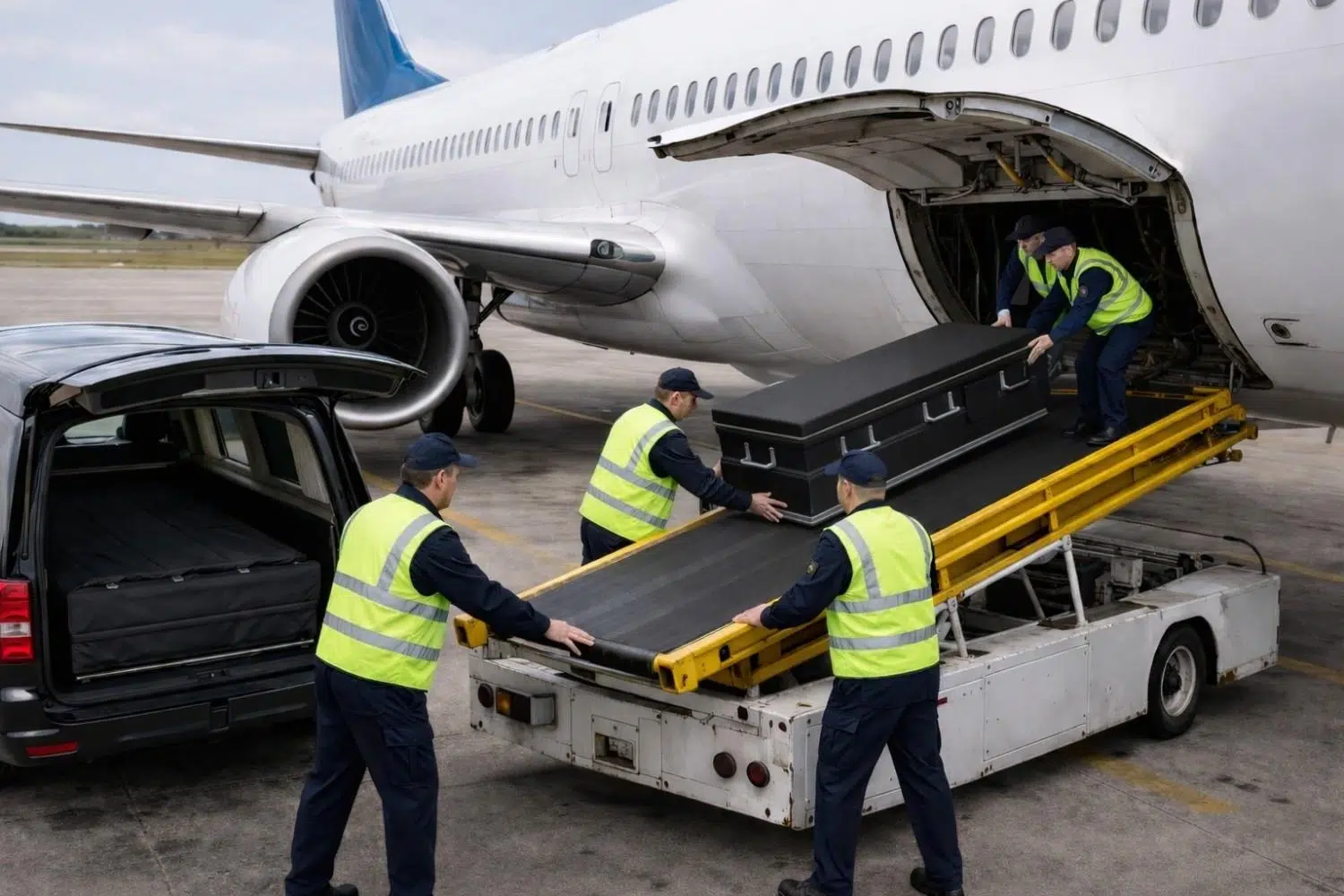
Losing a family member abroad is one of the most distressing experiences anyone can face. On top of grief, families are suddenly confronted with a set of unfamiliar legal, logistical, and administrative challenges. One of the first questions that almost always arises is: how long will this take? When can we bring our loved one home?
The honest answer is that it depends. Repatriation timelines vary considerably based on the country where the death occurred, the cause of death, whether an investigation or inquest is required, how quickly documentation can be gathered, and the efficiency of the repatriation service involved. In straightforward cases, repatriation can be completed within three to seven days. In more complex situations, it can take several weeks or even months.
Understanding what drives those timelines, and what can be done to keep things moving as quickly as possible, can help families prepare for what lies ahead.
The Fastest Cases: Three to Seven Days
In the most straightforward circumstances, international repatriation can be completed within three to seven days of the death. This is most likely when the cause of death is clear and uncontested, a doctor was present or the person was under medical care at the time of death, no coroner investigation or inquest is required, the deceased had comprehensive travel insurance with an active assistance line, all documentation is gathered quickly and without complications, and the receiving country has no unusual import requirements for human remains.
Under these conditions, a specialist repatriation company can move very quickly. The body is prepared, embalmed where required, placed in the appropriate coffin, and the necessary permits are obtained in parallel with flight bookings. If the stars align, a family can have their loved one home within a week.
The Most Common Timeline: One to Three Weeks
For the majority of repatriations, a realistic timeline is somewhere between one and three weeks. This allows time for the local authorities to issue a death certificate and release the body, for any necessary post-mortem to be completed, for the embassy or consulate of the home country to verify and authenticate documents, for the repatriation company to prepare the remains and obtain all permits, and for flight arrangements to be confirmed and executed.
Most families should plan around this window. It accounts for the ordinary delays that arise in most international repatriations: waiting for paperwork to be processed, embassy appointments, and coordinating across different time zones and working weeks.
When a Coroner or Inquest Is Involved
If the cause of death is unclear, sudden, or suspicious, the local authorities will likely refer the case to a coroner or equivalent official before releasing the body. A post-mortem examination is almost always required in these circumstances. In countries such as the UK, a coroner’s inquest may also be opened if the death was violent, unnatural, or occurred in custody.
A standard post-mortem can usually be completed within a few days, but where an inquest is opened, the process becomes considerably longer. Inquests can take weeks or months to conclude, particularly if the death involved multiple parties, a criminal investigation, or a public health matter. Until the coroner or relevant authority grants formal authorization for the release of the body, repatriation cannot proceed.
Families in this situation are advised to maintain regular contact with the coroner’s office through their repatriation company or the relevant embassy, and to ensure that all paperwork is prepared in advance so that the moment authorization is granted, the process can move immediately.
Country-Specific Delays and What Causes Them
The country where the death occurred is one of the biggest determinants of how long repatriation will take. Some countries have well-established, efficient processes that move quickly. Others are known for bureaucratic complexity that can extend timelines significantly.
India is one of the most administratively demanding countries for repatriation. Multiple government bodies are involved, documentation requirements are extensive, and state-level permissions may be required in addition to central approvals. Repatriations from India often take two to four weeks even in uncomplicated cases.
Pakistan, Bangladesh, and Sri Lanka similarly involve multiple layers of documentation and official attestation, which can push timelines out. Repatriations from these countries typically take two to three weeks as a baseline.
Many African nations, particularly those with limited infrastructure or administrative capacity, can take longer still. Where local funeral directors have limited experience with international repatriation, delays can compound quickly.
European countries are generally faster, thanks to well-developed administrative systems and established diplomatic relationships. Repatriations within Europe often fall within the one to two week range, and sometimes sooner.
The United States, Canada, and Australia all have organized systems for releasing human remains internationally, and timelines from these countries are generally predictable, ranging from one to two weeks depending on local factors.
How the Cause of Death Affects the Timeline
A natural death from a known medical condition, particularly where the person was already under the care of a doctor, is the least likely to cause delays. The cause of death is straightforward to certify, and local authorities are unlikely to order additional investigations.
An accidental death will typically prompt a post-mortem examination and may involve local police or safety authorities before the body is released. This adds time, though in most cases the process remains manageable.
A death that is sudden and unexplained, or one that occurs in circumstances that could involve criminal activity, is most likely to trigger a full investigation. These cases carry the most uncertainty around timeline. Families should be realistic that in such circumstances, weeks or months may pass before repatriation can proceed.
Deaths involving infectious or contagious disease may also involve public health authorities, who must be satisfied that the remains pose no ongoing risk. A freedom from infection certificate must be obtained before international transport is permitted, and where there is any doubt about the cause of death, this process can slow things down.
The Impact of Travel Insurance on Speed
Having comprehensive travel insurance in place at the time of death makes a measurable difference to how quickly repatriation can be arranged. An insurer with a 24-hour emergency line can begin coordinating with local authorities, funeral directors, and airlines from the moment the death is reported. They fund the costs directly, removing the need for the family to raise and transfer large sums of money internationally before anything can begin.
Without insurance, the family must arrange and fund everything themselves, often from overseas. This introduces delays at every stage, from authorizing payments to sourcing a local funeral director with international experience. The difference in timeline between an insured and an uninsured repatriation can easily be a week or more.
Repatriating Cremated Remains: A Faster Option
Where the family is willing to consider local cremation followed by the repatriation of ashes, the timeline is typically much shorter. Cremated remains can be transported on commercial flights with the appropriate documentation and are subject to fewer regulatory requirements than a body.
In most countries, the documentation required includes a certified death certificate, a certificate of cremation, and sometimes a freedom from infection certificate. Once these are in hand, ashes can often be brought home within a few days of the cremation taking place. For families facing long delays due to an inquest or administrative hold on the body, local cremation followed by repatriation of ashes may be worth discussing with their repatriation specialist.
What Families Can Do to Avoid Delays
There are several practical steps that can help keep a repatriation moving as quickly as possible. Engaging a specialist repatriation company immediately is the single most effective step. They know the process, have existing relationships with local authorities and funeral directors, and will push for progress at every stage.
Notifying the relevant embassy or consulate promptly is equally important. The embassy can advocate on the family’s behalf, help authenticate documents, and liaise with local authorities. Contacting the travel insurer immediately after the death is reported ensures that funding and coordination support are in place from the outset.
Gathering personal documents belonging to the deceased, including their passport, travel insurance policy, and any available medical records, and making them available to the repatriation company early in the process, can prevent delays further down the line.
Managing Expectations During a Difficult Time
No repatriation specialist can guarantee a specific timeline, because too many variables lie outside anyone’s direct control. What a good specialist can do is be transparent about the process, communicate regularly with the family, and push every available lever to keep things moving. Delays are painful, but they are often unavoidable, and understanding the reasons behind them can help families navigate this period with a little more patience and clarity.
The goal, for every professional involved in the process, is to return a person to their family with the dignity and respect they deserve, and to do so as quickly as the law and logistics allow.
Let Harmony International Bring Your Loved One Home
Harmony International is a specialist international repatriation service with offices across the world and extensive experience managing repatriations from even the most complex destinations. Their team understands that every day matters to a grieving family, and they work quickly, thoroughly, and compassionately to reduce delays wherever possible.
Available 24 hours a day, 7 days a week, Harmony International handles every step: documentation, embalming, coffin preparation, permits, flights, and coordination with receiving funeral directors, so families can focus on supporting one another.
Read more in our Guide to International Repatriation Services.
Pages You Might Like:
UK repatriation services, Destinations We Repatriate, Into the UK, What to do when someone dies, Coffins we offer
 Call us
 Email us