



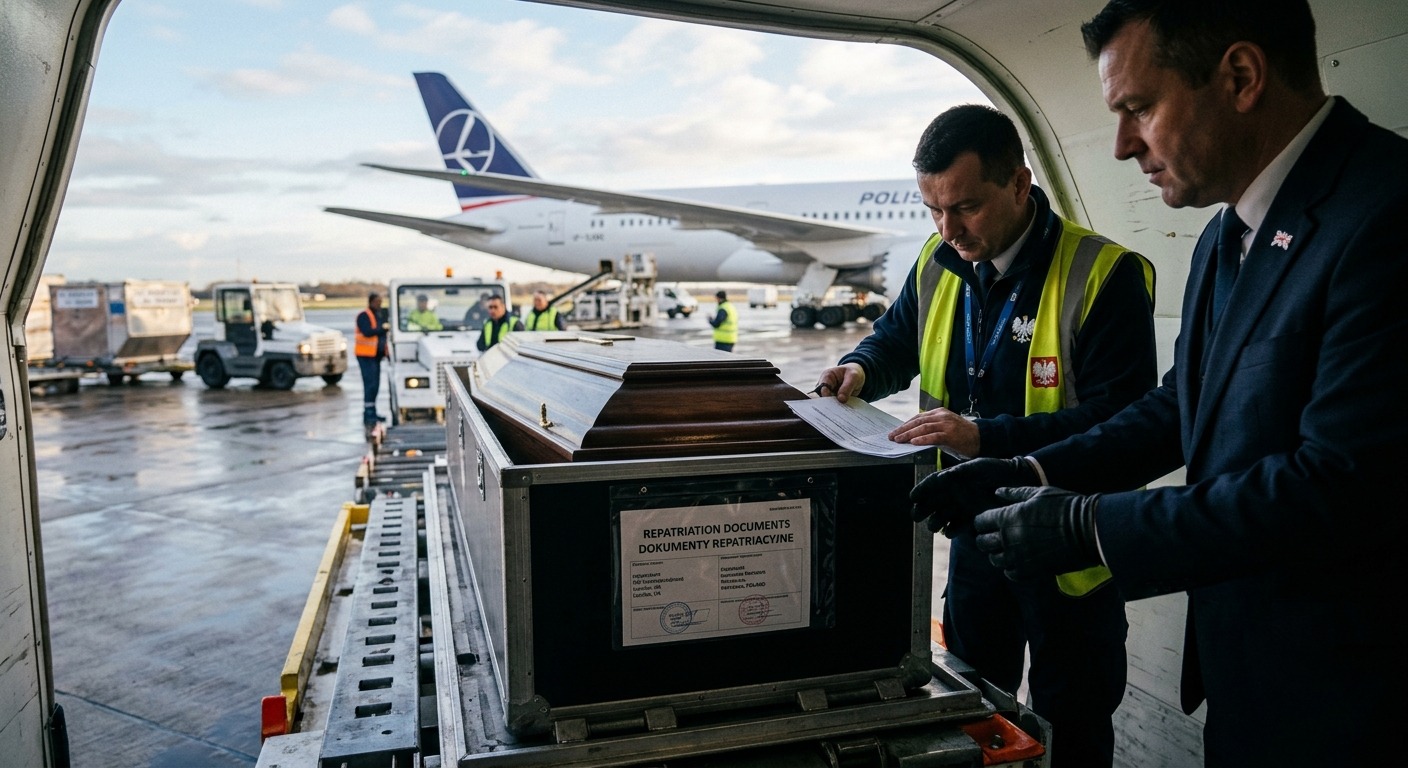
Losing a loved one who lived in the UK but belonged to Poland brings a second, practical burden on top of grief: bringing them home. Repatriation from the UK to Poland involves UK and Polish authorities, a Polish consulate, an airline, and a strict set of documents, and getting any one piece wrong can delay the process by days. This guide walks through the entire journey step by step, using current requirements published by GOV.UK and the Polish Government’s consular service, so you know exactly what to expect and what to prepare at each stage.
Key Takeaways
- Repatriation from the UK to Poland typically takes 5 to 7 working days once documentation, embalming and flight availability come together.
- The body must be embalmed and placed in a hermetically sealed, IATA compliant coffin before it can be flown out of the UK.
- A certificate allowing repatriation of the body or ashes must be obtained from the Polish Consulate in London, currently at a fee of 53 GBP.
- Suitable Polish arrival airports include Warsaw, Kraków, Gdańsk, Katowice and Wrocław, since not every airport has customs facilities for human remains.
- A specialist funeral repatriation company such as Harmony International can manage documents, embalming, transport and consulate liaison on your behalf.
What Repatriation From the UK to Poland Actually Involves
Repatriation is the formal process of transporting a deceased person’s body or ashes from one country to another for burial or cremation in their home country. When a Polish national or a person of Polish heritage dies in the UK, their family often wishes to bring them home to be laid to rest in cities such as Warsaw, Kraków, Gdańsk, Wrocław or Poznań, close to relatives and within the Catholic funeral traditions many Polish families observe.
The process sits at the intersection of three separate systems: UK death registration and coronial rules, international air transport regulations set by IATA, and Polish consular and sanitary requirements. None of these systems talk to each other automatically, which is exactly why families rely on a dedicated repatriation service to move documents and paperwork between all three in the correct order.
Step-by-Step Process: UK to Poland Repatriation
Step 1: Register the Death and Notify the Coroner
Every death in the UK must first be registered in the district where it occurred. If the death was unexpected, unnatural or the cause is unclear, the local coroner will also need to be involved before a body can be released for repatriation. You can check the exact registration steps on the GOV.UK guidance on registering a death, which also covers what happens when the death itself occurred outside the UK and the body needs to travel onward to Poland.
Step 2: Appoint a Funeral Repatriation Specialist
As soon as possible, appoint a repatriation specialist such as Harmony International to manage the case. A specialist funeral director takes over collection of the deceased, coordinates with hospitals, coroners and insurers, and liaises directly with the Polish Consulate in London so that the family is not chasing multiple institutions during an already difficult time.
Step 3: Collection and Full Embalming
The deceased is collected from the hospital, home or mortuary and taken into professional care. Embalming is a mandatory step for any international repatriation, since it preserves the body for transit and satisfies both UK export health rules and Poland’s entry requirements. Embalming is carried out by a qualified embalmer and is documented with a formal embalming certificate that later travels with the coffin.
Step 4: Placement in a Compliant Repatriation Coffin
- The coffin must be hermetically sealed and either zinc lined or built to the recognised international repatriation standard.
- It must meet IATA air cargo regulations, since the coffin will travel as freight on a scheduled passenger or cargo flight.
- It must also satisfy Poland’s specific entry requirements for human remains arriving by air.
Families can choose from a range of coffins for this stage, and a good repatriation provider will explain the difference between the standard sealed option and any bespoke or upgraded choices before costs are confirmed.
Step 5: Gather and Submit the Required Documents
This is the stage where most delays happen if paperwork is incomplete. According to the Polish Government’s consular guidance, the following documents are generally required before a certificate allowing repatriation into Poland will be issued.
- The original death certificate or a certified copy confirming the cause of death.
- A burial permit issued by the relevant district governor or mayor in Poland, requested by the family or an authorised funeral parlour.
- An embalming certificate confirming the body has been embalmed and sealed in an approved coffin.
- A freedom from infection certificate confirming the death was not caused by a notifiable infectious disease.
- A mortuary passport, also called a laissez-passer, issued once the above documents are reviewed.
The current consular fee for the repatriation certificate is 53 GBP, and the Polish Consulate in London aims to issue the certificate within three days of a complete application. Documents can be submitted in person, through a representative, or by post, and a professional repatriation company will usually handle this submission directly so nothing is missed.
Step 6: Book the Flight and Arrange Airport Logistics
Once documentation is in order, the coffin is transported to a UK airport for air freight to Poland. Not every Polish airport is equipped to receive human remains, so flights are usually routed into Warsaw Chopin, Kraków-Balice, Gdańsk, Katowice or Wrocław, all of which have the necessary customs facilities. The repatriation company arranges customs clearance on the UK side before departure and coordinates handover to a Polish funeral director on arrival.
Step 7: Arrival, Customs Clearance and Handover in Poland
On arrival in Poland, the coffin clears customs using the documents that travelled with it, including the death certificate, embalming certificate and the consular repatriation certificate. A local Polish funeral director then takes responsibility for the deceased and coordinates the funeral, burial or cremation according to the family’s wishes and, where relevant, Catholic funeral rites.
Bringing a Loved One Back From Poland to the UK
The process also runs in reverse when a British national or UK resident dies in Poland and the family wants to bring them home. Under GOV.UK’s bereavement guidance for Poland, the death must first be registered locally in Poland and a Polish death certificate obtained. The body then needs to be embalmed and placed in a zinc lined coffin before it can leave the country, and if cremation is preferred instead, the local Sanitary Inspectorate must seal the urn before release to a UK based funeral director.
Once the body or ashes arrive back in the UK, the death still needs to be registered locally in England, Wales, Scotland or Northern Ireland before a funeral can proceed. This normally requires an authenticated translation of the Polish death certificate and a certificate of no liability to register issued by the UK registrar in the area where the funeral will take place. If cremation is planned, the coroner must also issue the necessary permission before the crematorium can proceed.
How Long Does Repatriation From the UK to Poland Take
Most straightforward cases are completed within 5 to 7 working days from the point all documentation is submitted, subject to consular processing and flight availability. Cases involving a coroner’s investigation, an unclear cause of death, or missing paperwork from the deceased’s country of origin can take considerably longer, so appointing a specialist early is the single biggest factor in keeping the timeline as short as possible.
What Does Repatriation to Poland Cost
Costs vary by provider and by the specific circumstances of the case, but families should generally budget for three separate elements: the flight cost for the coffin, the repatriation service fee covering documentation, embalming, coffin and transport, and any optional extras such as an upgraded coffin or a UK service before the flight departs. Flight costs into cities such as Kraków typically start from around £750, while a standard repatriation service package often begins from around £1,750 plus the flight cost. Bespoke packages, including a choice of coffin or a UK based service before repatriation, are usually quoted on application once the family’s specific wishes are known.
- Ask whether the quoted price includes all consular fees, embalming and coffin, or whether these are billed separately.
- Check if the deceased had travel or life insurance, since many policies include a repatriation benefit that can offset costs.
- Confirm which Polish airport the flight will arrive into, since this affects both cost and onward transport arrangements.
Choosing the Right Repatriation Provider
- Look for a provider that follows IATA international repatriation standards for coffins and air transport.
- Confirm they have direct experience liaising with the Polish Consulate in London on mortuary passports and burial permits.
- Ask whether support is available 24/7, since deaths and urgent paperwork do not follow office hours.
- Check whether the team offers Polish speaking support so nothing is lost in translation with relatives in Poland.
- Read independent reviews and ask for a clear, itemised quote before signing anything.
Let Harmony International Guide You Through Every Step
Repatriation from the UK to Poland is a detailed legal and logistical process, but you should never have to manage it alone. Harmony International has supported Polish families across the UK since 2013, handling collection, embalming, documentation, the Polish Consulate process and every stage of the journey home with dignity and care. Our team is available 24 hours a day, seven days a week, and follows IATA international repatriation standards on every case.
If you need to arrange repatriation to Poland or simply want to understand your options, speak to our team now for compassionate, expert guidance at every step.
Frequently Asked Questions
What documents are required for repatriation from the UK to Poland?
You will typically need the death certificate, an embalming certificate, a freedom from infection certificate, a burial permit from the relevant Polish local authority, and a mortuary passport issued by the Polish Consulate in London.
How long does repatriation from the UK to Poland take?
Most cases are completed within 5 to 7 working days once all documentation is submitted, though the timeline can extend if a coroner’s investigation or additional paperwork is needed.
Is embalming required for repatriation to Poland?
Yes, embalming is mandatory. The body must be embalmed and placed in a hermetically sealed, internationally compliant coffin before it can be transported out of the UK.
Which Polish airports can receive a repatriated body?
Airports with the necessary customs facilities for human remains include Warsaw Chopin, Kraków-Balice, Gdańsk, Katowice and Wrocław. Not every regional airport is equipped to accept this type of freight.
How much does repatriation from the UK to Poland cost?
Costs depend on the flight route, coffin choice and any bespoke services, but families should budget for the flight, a standard repatriation service fee, and any optional extras, with an accurate figure available once a provider reviews the specific case.
Can Harmony International help with the Polish Consulate paperwork?
Yes, Harmony International liaises directly with the Polish Consulate in London on your behalf, preparing and submitting the required documents so your family does not have to manage the process alone.
 Call us
 Email us