



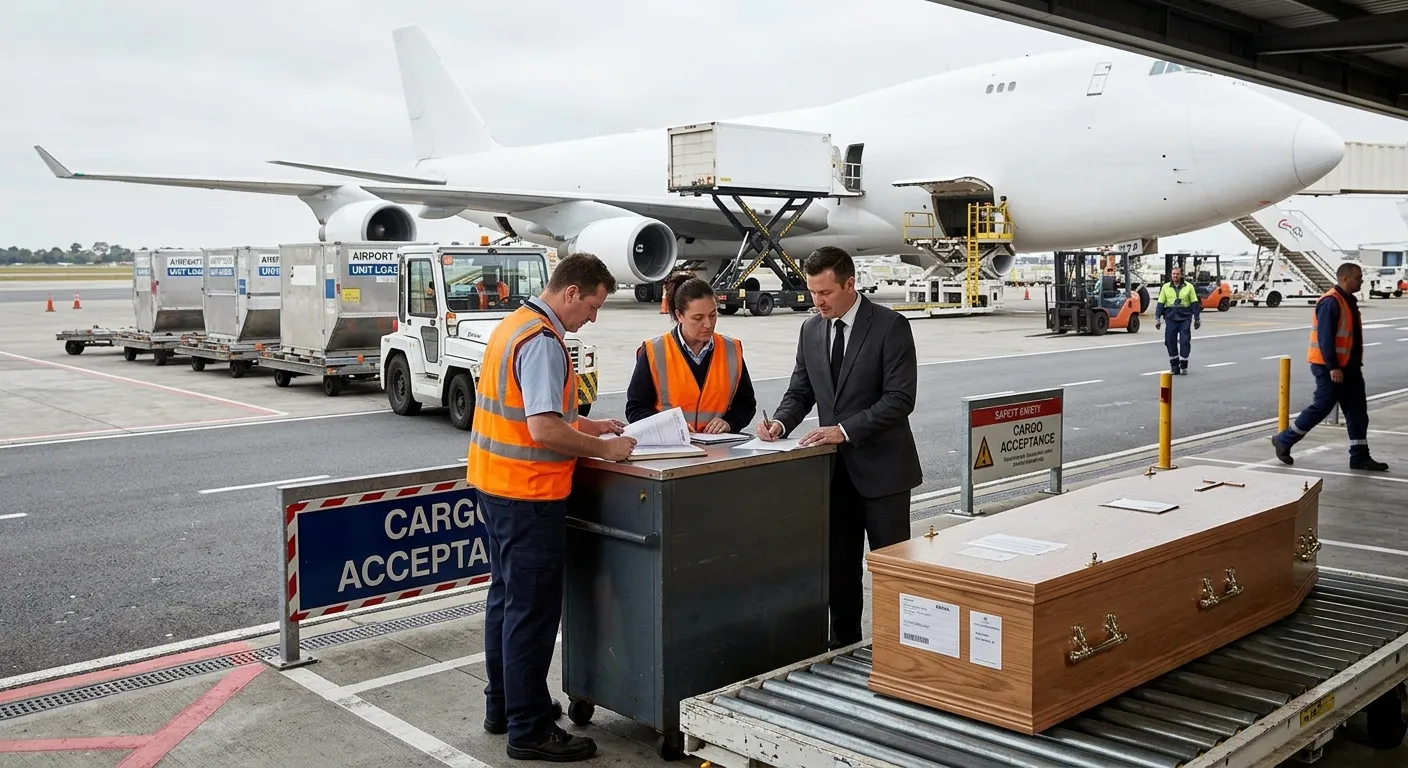
Moving a loved one through an airport, whether as cremated remains in hand luggage or as a coffin travelling in the cargo hold, involves a very specific set of security procedures that most families only encounter once. Airport security staff, airlines and customs officers all treat human remains as a distinct category, with its own screening rules, packaging standards and paperwork, separate from ordinary baggage or freight.
This guide explains exactly what happens at airport security for both cremated remains and full body repatriation, what documents you need to carry, and where the process most often goes wrong. If you are arranging an international repatriation from the UK right now, you can go straight to Harmony International for 24 hour support, or read on for a full breakdown of the security and screening process.
Why Airport Security Treats Human Remains Differently
Aviation security exists to confirm that nothing dangerous or undeclared is moving through the system, and human remains fall into a sensitive category that combines strict screening with visible respect for the deceased. Cremated remains must still pass through an X-ray machine like any other item, while a coffin travelling as cargo is booked, labelled and handled under a specific process rather than treated as general freight. Both routes are legal and routine, but each follows its own set of rules that families are expected to meet before travel.
How Cremated Remains Are Screened at the Security Checkpoint
Ashes carried through an airport, whether in carry on or checked luggage, must be screened just like any other item passing through the checkpoint. Security officers around the world, including at UK and US airports, will not open an urn or container to look inside, since this is considered disrespectful to the deceased. This single rule shapes almost every other piece of advice about flying with ashes, because the container itself becomes the deciding factor in whether the remains can travel at all.
- Choose a container made from wood, cardboard or plastic rather than metal, since metal often produces an opaque image on X-ray.
- Avoid dense stone, ceramic or lead lined urns, since security officers cannot clear a container they cannot see through.
- Carry the cremation certificate and death certificate with you, since some airlines request proof of contents at check in.
- Consider a temporary travel container for the flight, then transfer the ashes into a permanent urn once you arrive.
- Contact the airline in advance to confirm whether ashes can travel as carry on or must go in the hold.
The official position from the US Transportation Security Administration states plainly that officers will not open a cremation container even if the passenger offers permission, which is confirmed on the TSA guidance page for cremated remains. UK airports follow the same underlying principle, screening the container by X-ray rather than opening it.
How Coffins Move Through Airport Cargo Security
A full body repatriation service in uk does not pass through the same passenger security lane as hand luggage. Instead, the coffin is booked and transported as air cargo under a specific handling code, most commonly HUM, which triggers a distinct set of procedures from acceptance at the cargo terminal through to loading and unloading. This process is governed globally by the International Air Transport Association, whose Compassionate Transportation Manual sets out packaging standards, documentation and staff training requirements that airlines and freight forwarders must follow.
- The coffin is usually collected privately and screened in a dedicated area away from public view and passenger traffic.
- Airlines require a hermetically sealed coffin, often zinc lined, to meet international health and safety standards.
- Embalming is typically required before the coffin can be accepted for international air transport in most countries.
- Ground staff handling the coffin follow chain of custody procedures so the remains are tracked at every stage of transit.
- Loading and unloading often take place in screened sections of the airport specifically to protect the family’s privacy.
This deliberate discretion serves several purposes at once, protecting the privacy of grieving families, limiting the risk of interference, and ensuring ground staff treat the coffin with consistent care throughout the journey, as detailed in recent industry reporting on how human remains move through airfreight.
Documents That Must Travel With the Remains
Airport security and customs will not release a coffin or urn for travel without the correct paperwork, and missing a single document is one of the most common causes of delay. In the UK, the process usually begins with registering the death and obtaining an official death certificate, after which further certificates are added depending on whether the death was referred to a coroner.
- A death certificate confirming the registration of the death with the relevant register office.
- An Out of England certificate, or the equivalent coroner clearance, confirming there is no legal objection to removal.
- An embalming certificate confirming the body has been prepared to international transport standards.
- A certificate of freedom from infection, particularly where the death involved an infectious illness.
- An airway bill and export customs declaration covering the coffin as cargo on the chosen flight.
- A consular mortuary certificate, where required by the destination country, confirming the identity of the deceased.
The UK government’s own guidance on what to do when someone dies abroad, and the reverse process of moving a body out of the UK, is available through GOV.UK’s guidance for deaths abroad, and is a useful starting point before any documents are submitted to a coroner or airline.
Step by Step: What Happens at the Airport
Understanding the sequence of events helps families know what to expect and reduces the stress of not knowing what comes next. The exact order can vary slightly by airline and airport, but the core structure is consistent across most international routes.
- The repatriation company or funeral director confirms a booking with the airline under the HUM cargo code.
- All documents are checked and submitted to the coroner, registrar and airline before the coffin travels to the airport.
- The coffin is collected from the funeral home and conveyed to the departure airport ahead of the scheduled flight.
- Cargo security screens the coffin in a private area separate from the main passenger security checkpoints.
- The coffin is loaded onto the aircraft and the airway bill and documents travel with the shipment.
- On arrival, customs at the destination airport clears the coffin before it is released to the receiving funeral director.
Cremated remains carried by a passenger follow a simpler path, since the traveller carries the urn through the standard security checkpoint alongside their own hand luggage, subject to the X-ray and non-opening rules described above.
Common Mistakes That Cause Delays at Airport Security
- Choosing a metal or heavily lined urn that produces an unclear X-ray image and cannot be screened properly.
- Travelling without the death certificate or cremation certificate, which some airlines request at check in.
- Booking flights before the coroner has issued the Out of England certificate or equivalent clearance.
- Assuming every country accepts the same documents, when in fact each destination sets its own entry requirements.
- Leaving embalming or coffin preparation until the last minute, which can push the travel date back by several days.
How Harmony International Manages the Airport Security Process
Because so much of this process happens away from the family, working with a specialist who understands airport cargo screening, IATA packaging rules and coroner documentation makes a genuine difference to how smoothly things run. Harmony International manages the full journey from collection through to cargo screening and customs clearance, liaising directly with airlines, coroners and consular authorities on the family’s behalf. Their guide on how to get a death certificate in the UK and their overview of body repatriation from the UK to other countries both explain the documentation stage in more detail.
Final Thoughts
Airport security procedures for human remains exist to balance strict safety standards with visible respect for the deceased, whether that means an X-ray screened urn passing through the passenger checkpoint or a coffin moving quietly through a dedicated cargo security area. Knowing the correct container, the required documents and the general sequence of events removes much of the uncertainty families face at an already difficult time.
If you need support arranging a repatriation and want the airport security and documentation handled correctly from the outset, contact Harmony International for 24 hour guidance and a dedicated case handler throughout the process.
Frequently Asked Questions
Will airport security open an urn to check what is inside?
No. Airport security officers will not open a container holding cremated remains, even if asked, since this is considered disrespectful. The container must be able to be cleared by X-ray without being opened.
What type of urn is best for airport security screening?
A lightweight wood, cardboard or plastic container is best, since these materials allow the X-ray scanner to see clearly inside. Dense metal or stone urns often produce an opaque image and can be refused at the checkpoint.
Do coffins go through the same security checkpoint as passengers?
No. Coffins travel as air cargo under a specific handling code and are screened separately in a dedicated cargo security area, away from the passenger terminal and public view.
What documents are required to fly with human remains internationally?
Typical requirements include a death certificate, an Out of England certificate or equivalent coroner clearance, an embalming certificate, a certificate of freedom from infection, and an airway bill covering the coffin as cargo.
Is embalming always required before air travel?
Most countries and airlines require embalming before a coffin can be accepted for international air transport, though some countries permit alternatives such as refrigeration for religious or cultural reasons.
How long does airport processing take for a repatriation?
Once all documents are confirmed, cargo screening and loading typically take place within the standard airline cutoff for freight, though the overall repatriation timeline depends on how quickly the death certificate and coroner clearance are issued.
Pages You Might Like:
UK repatriation services, Destinations We Repatriate, Into the UK, What to do when someone dies, Coffins we offer
 Call us
 Email us