



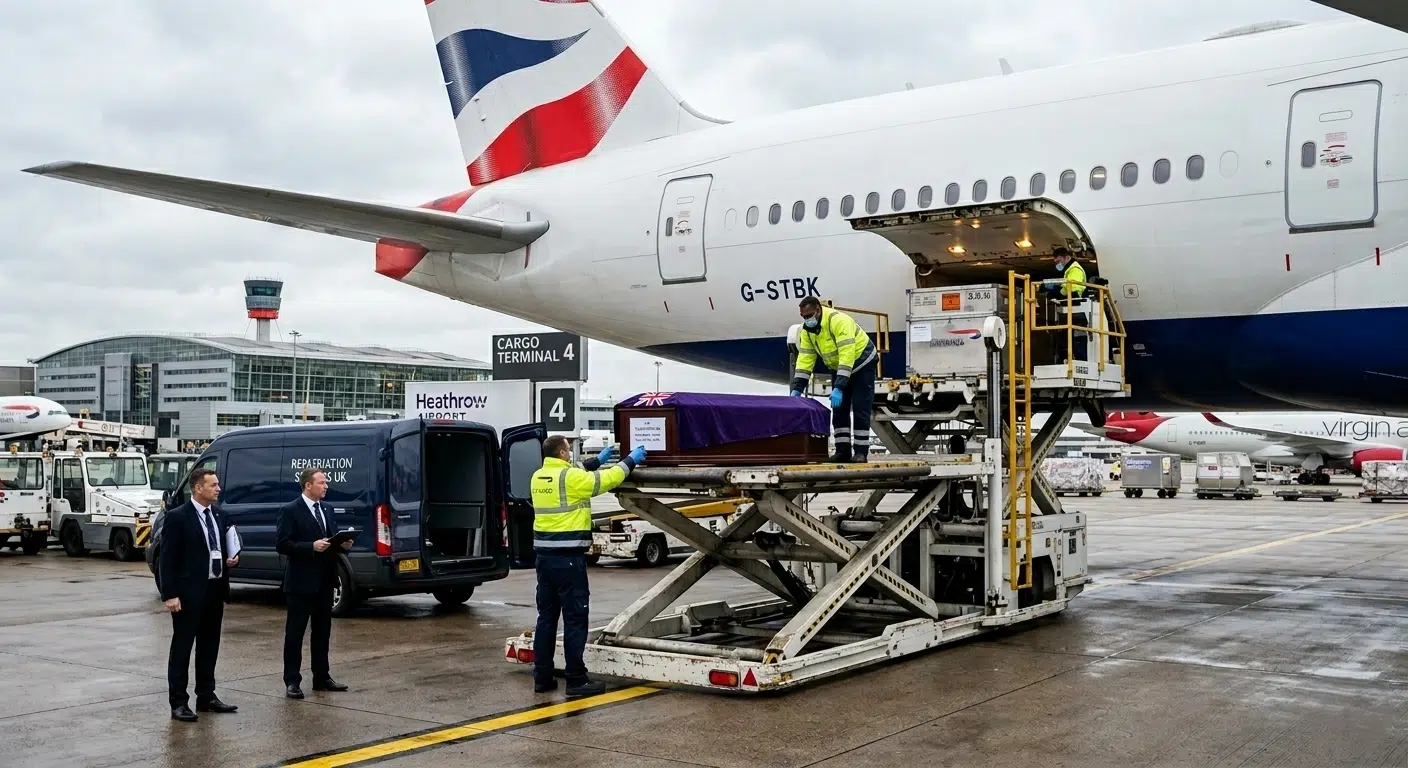
Losing a loved one is never easy. When that loss happens abroad, the emotional and administrative burden becomes even heavier, especially if you intend to bring the deceased home.
In the UK, repatriation of human remains involves a regulated process with legal, logistical, health, and documentation requirements that must be met before international transport can take place. Delays are unfortunately common, but most of it can be prevented with proper planning and experienced professional support.
This guide explains the most common causes of delay and how families can minimise complications during the repatriation process.
1. Coroner Involvement and Investigations
Why It Causes Delays
In England and Wales, if a death is sudden, unexplained, accidental, or suspicious, the local coroner must be notified. The coroner has legal authority over the body until investigations are complete and permission is granted for removal from the UK.
Before repatriation can proceed, a Notice to a Coroner form must be submitted, and the coroner must issue a certificate authorising removal of the body. If a post-mortem examination or formal inquest is required, this can significantly extend the timeline. In complex cases, the process may take several weeks or longer.
How to Avoid or Minimise Delay
- Work with an international funeral director as early as possible. Experienced professionals understand coronial procedures and can ensure that all forms are correctly submitted without unnecessary back and forth.
- Provide complete and accurate medical and personal information promptly. Delays often occur when authorities are waiting for missing details.
- In some cases, it may be possible to request interim authorisation to allow repatriation while certain aspects of the investigation continue.
2. Incomplete or Incorrect Documentation
Why It Causes Delays
Documentation issues are one of the most common reasons for repatriation delays. International transport of human remains requires multiple official documents. Missing, incorrect, or uncertified paperwork can result in refusals at airports or by destination authorities.
Typical required documents include:
- Certified death certificate
- Passport or official identification of the deceased
- Coroner’s removal certificate if applicable
- Embalming certificate
- Freedom from infection or health certificate
- Export permit
- Consular or embassy clearance where required
Different countries have different requirements. Some require apostille certification or legalisation of UK documents. Others may request translated copies certified by authorised translators.
How to Avoid or Minimise Delay
- Request several certified copies of the death certificate at the time of registration. Many authorities require original documentation rather than photocopies.
- Confirm the specific entry requirements of the destination country before making travel arrangements. Regulations vary widely.
- Use professional translation services if the receiving country requires documents in another language.
- Partner with an experienced repatriation provider who checks all documentation against airline and destination checklists before booking flights.
3. Health and Embalming Requirements
Why It Causes Delays
Most countries and airlines require embalming prior to international transport. A health certificate confirming that the deceased did not suffer from certain infectious diseases is often mandatory. In addition, airlines require specific coffin standards, typically including a sealed and zinc-lined interior.
If embalming is not completed according to international standards or documentation is incomplete, airlines will refuse to accept the body for transport.
How to Avoid or Minimise Delay
- Arrange embalming as soon as possible once repatriation is confirmed. Early preparation helps prevent last-minute scheduling problems.
- Confirm airline packaging requirements before preparation is finalised. This ensures that the coffin and sealing procedures meet the carrier’s regulations.
4. Airline and Cargo Logistics
Why It Causes Delays
Human remains are transported as special cargo. Airline cargo departments operate under strict procedures and limited space allocations. Flights may be fully booked, or certain routes may not operate daily.
Cargo acceptance is conditional upon full documentation review at the time of check-in. Even minor paperwork discrepancies can result in refusal and rebooking.
How to Avoid or Minimise Delay
- Schedule flights only after all permissions and certificates are secured. Booking too early can lead to cancellations if authorisations are delayed.
- Choose airlines experienced in transporting human remains. Established carriers are more familiar with documentation requirements and handling procedures.
- Allow flexibility in travel dates where possible to accommodate cargo availability.
5. Embassy and Destination Country Requirements
Why It Causes Delays
Repatriation does not end with UK approval. The destination country must also grant permission for entry. Some countries require consular clearance, specific embalming declarations, or pre-notification to customs authorities.
Failure to obtain required embassy documentation can result in clearance delays upon arrival.
How to Avoid or Minimise Delay
- Contact the relevant embassy or consulate early in the process to confirm all requirements.
- Ensure documents are legalised or apostilled if required by the receiving country.
- Work with a repatriation service that coordinates with both UK and overseas authorities to ensure compliance on both sides.
6. Insurance and Financial Complications
Why It Causes Delays
Repatriation involves professional fees, mortuary costs, documentation processing, airline cargo charges, and sometimes consular fees. When payment responsibility is unclear or insurance approval is pending, arrangements may be postponed.
Some insurance providers require specific documentation before authorising coverage, which can add time to the process.
How to Avoid or Minimise Delay
- Notify travel or life insurance providers immediately after the death.
- Clarify coverage limits and required documentation early to prevent unexpected financial holds.
- If insurance is involved, ask whether they have preferred repatriation partners who can expedite arrangements.
7. Administrative and Regulatory Backlogs
Why It Causes Delays
Occasionally, delays occur due to public holidays, government office closures, staff shortages, or administrative backlogs. In rare situations, diplomatic issues or special local regulations may slow processing times.
While these factors are outside a family’s control, proper coordination can reduce their impact.
How to Avoid or Minimise Delay
- Begin the repatriation process as soon as possible after death is registered.
- Allow realistic timelines, particularly during peak holiday periods.
- Choose experienced professionals who maintain direct communication with authorities and can respond quickly to unexpected requirements.
Conclusion
Body repatriation from the UK is a detailed and highly regulated process. Although the process can feel overwhelming during an already difficult time, many delays are preventable with proper preparation and expert coordination.
If you need compassionate and experienced support, Harmony International is here to help. With offices across the world, Harmony International have been helping families, friends and communities repatriate loved ones to and from all four corners of the globe, ensuring every step is handled with care, professionalism, and dignity.
Contact Harmony International today to receive trusted guidance and dedicated assistance throughout the entire repatriation process.
Read more in our Guide to International Repatriation Services
Pages You Might Like:
UK repatriation services, Destinations We Repatriate, Into the UK, What to do when someone dies, Coffins we offer
 Call us
 Email us