



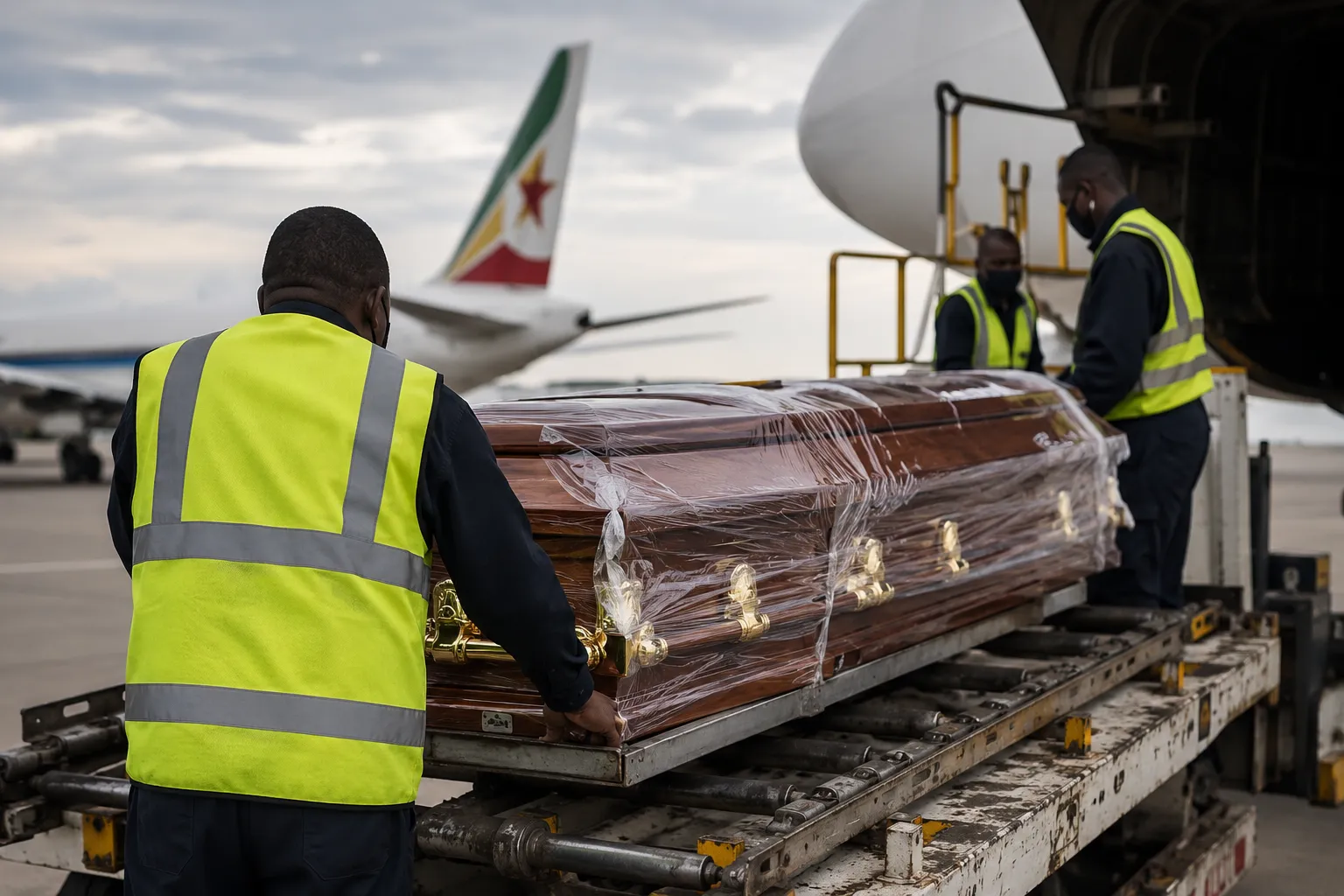
Losing a loved one is never easy. When death occurs far from home, in a country like the United Kingdom, the pain of grief is compounded by the urgent and unfamiliar task of arranging their return. For Zimbabwean families living in or connected to the UK, repatriation is a meaningful act of love, of ensuring that a person is laid to rest among family, within their community, and according to their cultural or religious traditions.
This guide walks you through every stage of the UK to Zimbabwe body repatriation process, from the moment of death to the arrival of your loved one on Zimbabwean soil. It covers the documentation required, the legal steps involved, coffin regulations, timelines, costs, and what to look for in a repatriation service provider.
What Is Body Repatriation?
Body repatriation is the formal process of transporting the remains of a deceased person from one country to another. For the Zimbabwean diaspora in the UK, this typically means arranging the dignified transport of a loved one from a UK city back to destinations such as Harare, Bulawayo, Mutare, or Gweru.
Unlike domestic funeral arrangements, international repatriation involves two sets of legal systems, multiple government agencies, airline cargo regulations, and consular authorities. This is why most families work with a specialist international funeral repatriation provider who can manage every element on their behalf.
Step 1: Registering the Death and Notifying Authorities
The first step following any death in England or Wales is to have it certified by a medical professional and registered with the local Register Office, ideally within five days. You will receive a death certificate, which is the foundational document for every subsequent stage of the repatriation process.
At this stage, you must also notify the following:
- The UK coroner, using the ‘Form of Notice to a Coroner of Intention to Remove a Body out of England or Wales’. The coroner must receive this notice and will typically wait four days before releasing the body for export.
- The Zimbabwean Embassy or High Commission in London (located at Zimbabwe House, 429 Strand, London). They will advise on the specific documentation requirements Zimbabwe requires for importing human remains.
- The deceased’s travel insurance provider, if applicable. Many policies include repatriation cover and can assist with costs for medical, legal, and transportation fees.
Step 2: Engaging a Specialist Repatriation Service
Once the death has been registered and the authorities have been notified, the most important practical decision is choosing who will manage the repatriation. Families are strongly advised to appoint a UK-based international funeral director who specialises in repatriation services. The UK’s Foreign, Commonwealth and Development Office (FCDO) maintains a list of vetted international funeral directors for this purpose.
A qualified repatriation provider will coordinate with the coroner, the Zimbabwean consular authorities, the airline, local funeral directors in Zimbabwe, and any hospitals or mortuary facilities involved. This level of coordination is what separates a professional repatriation service from a basic funeral arrangement.
Step 3: Documentation Required for UK to Zimbabwe Repatriation
Documentation is at the heart of a successful repatriation. Missing or incorrect paperwork can delay the process by days. The following documents are typically required for repatriation from the UK to Zimbabwe:
- Certified Death Certificate: Issued by UK authorities, this confirms the fact and cause of death.
- Embalming Certificate: Embalming is a mandatory requirement for international air transport. The certificate must confirm the procedure was carried out according to international standards.
- Non-Contagious Disease Certificate: This document certifies that the deceased did not suffer from any communicable disease at the time of death, as required by health and safety regulations.
- Sealed Coffin Certificate: Zimbabwean customs officials require confirmation that the coffin has been hermetically sealed for air transportation.
- Coroner’s Out of England Certificate: This authorises the removal of the body from England or Wales for export.
- Consular Approval from the Zimbabwean Embassy: The death certificate and supporting documents must be authenticated by the Zimbabwean embassy or consulate in London.
- Passport of the Deceased: The original Zimbabwean passport is usually required. UK authorities will cancel it following repatriation.
- Postmortem Reports (if applicable): Required when the cause of death was unnatural, such as an accident, poisoning, or crime.
An experienced repatriation provider will handle the collection, completion, and submission of all these documents, keeping the family informed at every stage.
Step 4: Embalming and Preparation of the Body
Embalming is not optional for international air repatriation. It is a legal requirement and serves to preserve the remains for the duration of the journey. The process must be carried out by a qualified embalmer, and the resulting certificate must accompany the body throughout transit.
Where families have specific religious or cultural requirements around the preparation and handling of the body, these should be communicated clearly to the repatriation provider at the earliest opportunity. Many specialist providers, including those serving the Zimbabwean community, are experienced in accommodating Christian, traditional African, and other indigenous practices.
Step 5: Coffin Requirements for International Air Transport
The coffin used for repatriation must comply with International Air Transport Association (IATA) regulations. This means the coffin must be hermetically sealed, which is typically achieved through a zinc lining. The zinc lining creates an airtight seal around the inner coffin, meeting the requirements of both the IATA and Zimbabwean customs authorities.
Families are often given the choice of coffin style and finish, with the zinc lining fitted internally. Some providers offer caskets with a built-in sealing system, removing the need for a separate zinc lining entirely. The weight and dimensions of the coffin will also affect the air freight cost, so it is worth discussing your options with the repatriation provider before making a selection.
Step 6: Flight Logistics and Airline Coordination
Human remains are transported as cargo on commercial passenger flights. The repatriation provider will liaise with airlines to identify suitable routes and flight options. The primary arrival point for repatriations to Zimbabwe is Robert Gabriel Mugabe International Airport (formerly Harare International Airport), located approximately 15 kilometres southeast of Harare city centre, which has customs clearance facilities appropriate for international repatriations.
Before a flight can be confirmed, the airline must issue an ‘OK to Forward’ clearance. This is only granted once all documentation has been verified. Once clearance is received, the repatriation provider will typically notify the family within a few hours so that they can arrange their own travel on the same flight if they wish to accompany their loved one.
Air freight costs are calculated based on the destination, airline, and the weight of the coffin. These costs are separate from the repatriation service fee and are added to produce the total cost of repatriation.
How Long Does UK to Zimbabwe Repatriation Take?
The timeline for repatriation depends primarily on how quickly the local authorities can issue the required documentation and the availability of suitable flights. In general terms, once the coroner has released the body and all paperwork is in order, the process takes approximately 5 to 10 working days.
Some providers can move more quickly when cases are straightforward and all documentation is prepared promptly. If speed is a priority, it is important to tell the repatriation provider at the outset so they can fast-track the paperwork process where possible.
What Does UK to Zimbabwe Repatriation Cost?
The cost of repatriation from the UK to Zimbabwe is made up of two main components: the repatriation service fee charged by the funeral director and the flight cargo cost.
Repatriation service fees typically cover the collection of the deceased, embalming, the supply of a repatriation coffin with zinc lining, completion of all legal documentation, consular liaison, and transport of the coffin to the departure airport. Flight costs for cargo from the UK to Harare generally start from around £750, and service fees begin from around £1,750, though bespoke packages with additional services are priced on application.
Additional costs may include embassy fees, notarial services, document translation or legalisation, upgraded coffin options, and mortuary storage beyond any included period.
If the deceased had travel insurance, it is worth contacting the insurer as a first step, as many policies include repatriation cover that can significantly reduce the out-of-pocket cost for families.
Arrival in Zimbabwe: What Happens Next?
On arrival at Robert Gabriel Mugabe International Airport in Harare, the coffin undergoes customs clearance. The Zimbabwean funeral director or representative appointed by the repatriation provider receives the body at the airport and takes responsibility for the onward journey to the family.
From this point, funeral arrangements in Zimbabwe can proceed according to the family’s wishes, including services in Harare, Bulawayo, Mutare, Gweru, or in the family’s home area. A thorough repatriation provider will have established relationships with Zimbabwean funeral directors and can assist in coordinating this final stage of the journey.
Let Harmony International Guide You Through Every Step
Repatriating a loved one from the UK to Zimbabwe is a process that touches on law, logistics, and deeply personal grief all at once. It requires careful attention to documentation, compliance with both UK and Zimbabwean regulations, and the kind of coordinated professional support that only a specialist repatriation service can provide.
Harmony International has been supporting families through this journey since 2013. With deep experience in Zimbabwean cultural customs, established relationships with consular authorities and Zimbabwean funeral directors, and a compassionate team available 24 hours a day, Harmony International offers a complete, professionally managed repatriation service from any UK location to cities across Zimbabwe, including Harare, Bulawayo, Mutare, and Gweru.
If you have lost a loved one and need to arrange repatriation to Zimbabwe, contact Harmony International today. Their team will guide you with clarity, compassion, and professionalism from the very first call.
Frequently Asked Questions
- Does a deceased person travel on their passport?
No. A deceased person does not travel on a passport in the conventional sense. Instead, special export documents, such as a Body Removal Certificate or Out of Country Permit, are prepared by the repatriation provider. The passport of the deceased is typically used for identity verification purposes and is cancelled by UK authorities following the repatriation.
- Is embalming mandatory for repatriation from the UK to Zimbabwe?
Yes. Embalming is a legal requirement for international air transport of human remains. An embalming certificate must be issued by a qualified professional and submitted with the documentation presented to Zimbabwean customs authorities.
- What type of coffin is required for air transport to Zimbabwe?
The coffin must be hermetically sealed to comply with IATA regulations. This is most commonly achieved through a zinc-lined inner coffin, though some caskets incorporate a built-in sealing mechanism. A sealed coffin certificate must be presented to Zimbabwean customs officials.
- How long does the repatriation process take?
Once the coroner releases the body and all documentation is in order, repatriation from the UK to Zimbabwe generally takes between 5 and 10 working days. The exact timeline depends on the speed at which local authorities issue the necessary permits and on flight availability.
- Which airport does the body arrive at in Zimbabwe?
The primary entry point for repatriations to Zimbabwe is Robert Gabriel Mugabe International Airport in Harare, which has the customs clearance infrastructure needed for international repatriations. Onward transfer to other cities such as Bulawayo, Mutare, or Gweru is arranged through local Zimbabwean funeral directors.
- Can I use travel insurance to cover the cost?
If the deceased held a travel insurance policy, it is one of the first places to check. Many travel insurance policies include repatriation cover, which can contribute to air freight, documentation, and funeral director fees. Contacting the insurer promptly and in parallel with the repatriation process is strongly recommended.
- Do I need to involve the Zimbabwean Embassy in London?
Yes. Consular approval from the Zimbabwean Embassy or High Commission in London is a required step in the documentation process. The death certificate and other supporting documents must be authenticated by the embassy before the remains can be cleared for export. A professional repatriation provider will manage this liaison on your behalf.
Pages You Might Like:
UK repatriation services, Destinations We Repatriate, Into the UK, What to do when someone dies, Coffins we offer
 Call us
 Email us