



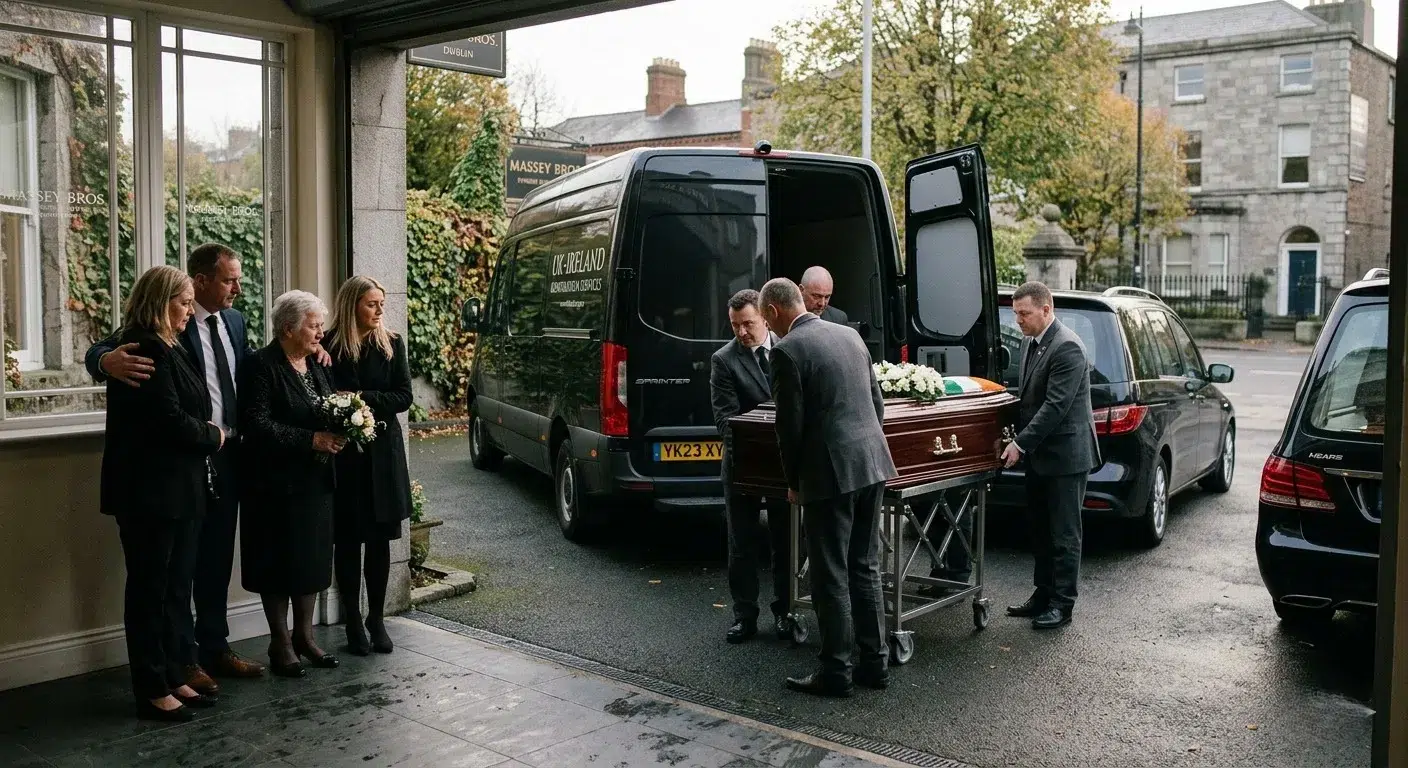
Losing a loved one abroad is one of the most painful experiences a family can face. When a death occurs in the United Kingdom and the family wishes to bring their loved one home to Ireland, the process of repatriation begins. While the UK and Ireland share strong historical, cultural and geographic ties, the process of returning a deceased person across the border still involves a series of legal, logistical and administrative steps that can feel overwhelming during an already difficult time. This guide is designed to walk families through everything they need to know about repatriating a loved one from the UK to Ireland, helping to make the process as clear and manageable as possible.
What Is Repatriation?
Repatriation refers to the process of returning a deceased person to their country or region of origin or residence. When someone dies in the UK and their family wants them buried or cremated in Ireland, whether in the Republic of Ireland or Northern Ireland, a formal repatriation process must be followed. This involves working with funeral directors, airlines, legal authorities and sometimes consular services to ensure the deceased is transported safely, respectfully and in full compliance with the laws of both countries.
Is Repatriation from the UK to Ireland Considered International?
Many families assume that because the UK and Ireland have such close connections, the process is straightforward. In reality, while Northern Ireland falls under UK jurisdiction, repatriation to the Republic of Ireland is still classified as an international transfer. This means that all the formalities associated with international repatriation apply, including specific documentation, embalming requirements, approved coffin specifications and coordination with relevant authorities on both sides. Even repatriation to Northern Ireland from mainland Great Britain requires careful handling due to different administrative procedures.
The Step-by-Step Process
Understanding the stages of repatriation can provide some comfort during a distressing time. Here is a general overview of how the process typically unfolds:
1. Registering the Death
The first step is to officially register the death in the UK, which is done at the local register office where the death occurred. A death certificate will be issued and this document is central to everything that follows. If there are any unusual circumstances surrounding the death, a coroner may need to be involved before the body can be released, which can add time to the process.
2. Obtaining the Freedom to Remove Certificate
Before a body can be transported out of England, Wales or Scotland, a Freedom to Remove certificate (also called an Out of England certificate) must be obtained from the local coroner. This document confirms that there are no legal objections to the deceased being moved. In Scotland, this is handled through a different but equivalent process. Your repatriation specialist will manage this on your behalf.
3. Embalming and Preparation
Embalming is a standard and typically required step for international repatriation. It ensures that the body is preserved appropriately for travel and meets the health and safety requirements of the receiving country. Professional repatriation services include full embalming as part of their standard package, carried out with care and dignity.
4. Selecting a Suitable Coffin
Not every coffin is approved for international air travel. Repatriation to Ireland requires a hermetically sealed coffin that complies with both UK export and Irish import regulations. Reputable repatriation companies offer a range of compliant coffins designed for this purpose, allowing families to choose an option that reflects their loved one’s dignity and their own wishes.
5. Arranging the Flight
The deceased will be transported by air freight rather than as a passenger. Experienced repatriation specialists handle all arrangements with the airline, ensuring the coffin is correctly prepared, labelled and loaded. Common departure airports for Ireland-bound repatriation include London Heathrow, London Gatwick, Manchester and Birmingham, with arrivals typically at Dublin, Cork, Shannon, or Belfast airports.
6. Handling Customs and Clearance
Upon arrival in Ireland, the coffin must pass through customs clearance. This requires a complete set of correctly completed documentation, including the death certificate, embalming certificate, Freedom to Remove certificate and the airway bill. A professional repatriation service will ensure all paperwork is in order before departure to avoid delays on arrival.
7. Collection and Handover in Ireland
Once through customs, the coffin is collected and transferred to an Irish funeral home chosen by the family. From this point, the Irish funeral director takes over and the family can begin making funeral arrangements in accordance with their preferences, traditions and religious or cultural practices.
Documents Required for Repatriation to Ireland
Ensuring the correct paperwork is in place is critical to a smooth repatriation. The key documents typically required include:
- Original death certificate issued in the UK
- Certified translation if required by the receiving authority
- Freedom to Remove (Out of England) certificate from the coroner
- Embalming certificate completed by a registered embalmer
- Airway bill from the airline
- Coffin sealing certificate confirming the coffin has been hermetically sealed
- Any additional documentation requested by Irish customs or the receiving funeral home
A specialist repatriation company will gather, complete and coordinate all of these documents on the family’s behalf, significantly reducing the administrative burden at an already difficult time.
How Long Does the Process Take?
The timeline for repatriation from the UK to Ireland can vary depending on several factors. In straightforward cases where the cause of death is clear and no coroner involvement is required, the process can be completed within three to five working days. If a coroner’s inquest is needed or if documentation takes longer to process, the timeline can extend to one to two weeks or more. Families should be prepared for some uncertainty and work with a repatriation specialist who can give a more accurate estimate based on the specific circumstances.
What Does Repatriation to Ireland Cost?
The cost of repatriation is made up of several elements. These typically include the repatriation service fee charged by the specialist company, the cost of the coffin, flight and airfreight charges, documentation fees and any local funeral home costs in Ireland. As a general guide, repatriation services from the UK to Ireland start from around 1,750 pounds plus flight costs, with flights from London to Dublin beginning at approximately 750 pounds. Families who have travel insurance should notify their insurer of the death as early as possible, as many policies include repatriation cover that can offset some or all of these costs.
Practical Tips for Families
Here are some practical steps families can take to help the process go smoothly:
- Contact a specialist repatriation company as soon as possible after the death. They will take on the coordination role and relieve you of much of the administrative burden.
- Notify your travel insurance provider immediately if the deceased had a policy in place.
- Identify the Irish funeral home you wish to use in advance so arrangements can be communicated early.
- Gather any personal information about the deceased that may be needed, including their full legal name, date of birth, passport details and next of kin information.
- Keep copies of all documents received throughout the process.
- Ask your repatriation company for a dedicated point of contact so you have someone consistent to speak with throughout.
Repatriation to Both the Republic of Ireland and Northern Ireland
It is worth noting that the procedures for repatriation differ slightly depending on whether the final destination is the Republic of Ireland or Northern Ireland. Northern Ireland, as part of the United Kingdom, has slightly different administrative requirements compared to the Republic. However, both destinations require careful handling, proper documentation and professional coordination. A reputable repatriation company will be familiar with the specific requirements for both and will guide families accordingly.
You Do Not Have to Navigate This Alone
Repatriating a loved one from the UK to Ireland is a process that involves numerous moving parts, from legal documentation and coroner certificates to airline coordination and customs clearance. For families already dealing with grief, taking on these tasks can feel impossible. The good news is that you do not have to manage it alone.
Harmony International has been providing professional, dignified and compassionate repatriation services from the UK to Ireland since 2013. Their experienced team handles every aspect of the process on your behalf, from liaising with coroners and airlines to managing all necessary documentation and ensuring your loved one is returned home with the care and respect they deserve. With a dedicated point of contact available 24 hours a day, seven days a week, and a reputation built on trust and professionalism, Harmony International is ready to support your family every step of the way.
To speak with a specialist or to request a quote, contact Harmony International today on (+44) 2030 264 464 or visit harmony-international.co.uk. They are available around the clock to help.
Frequently Asked Questions
Do I need a specialist company or can I arrange repatriation myself?
While it is technically possible to arrange repatriation independently, the process is complex and involves multiple authorities, airlines and legal requirements that change regularly. A specialist repatriation company has established relationships with all relevant parties and the expertise to manage everything efficiently, which also reduces the risk of costly delays caused by paperwork errors.
Is embalming always required for repatriation to Ireland?
Yes, embalming is generally required for international repatriation, including to Ireland. It ensures the body is safely preserved for travel and meets the health regulations of both the UK and Ireland. A professional repatriation service will include full embalming as part of their standard offering.
Can I arrange for a funeral service in the UK before repatriation?
Yes. Many families choose to hold a small service or viewing in the UK before their loved one is transported to Ireland. Repatriation companies can accommodate this as part of a bespoke package. Speak with your repatriation specialist about what options are available and any additional costs involved.
What happens if a coroner is involved?
If the death is sudden, unexplained or occurs in certain circumstances, a coroner may need to investigate before the body can be released. This can delay the repatriation process. Your repatriation company will liaise directly with the coroner’s office and keep you informed of progress throughout. In some cases, an interim death certificate can be issued that allows other arrangements to proceed while the inquest continues.
Will travel insurance cover the cost of repatriation?
Many travel insurance policies include repatriation cover. It is important to notify the insurer as soon as possible after the death, as they may have preferred suppliers or processes that must be followed to make a claim. Your repatriation company can often work directly with insurance companies to simplify the process for the family.
How do I choose a funeral home in Ireland?
You can choose any licensed Irish funeral home to receive your loved one. Your repatriation company will coordinate the handover directly with the funeral home you select. If you are unsure which Irish funeral director to use, your repatriation specialist may be able to suggest reputable options in the relevant area.
What coffin types are suitable for repatriation to Ireland?
Only hermetically sealed coffins that comply with airline and customs regulations are permitted for international air freight. Reputable repatriation companies maintain a selection of approved coffins ranging from standard options to more premium choices, allowing families to select something that feels appropriate while meeting all legal requirements.
Pages You Might Like:
UK repatriation services, Destinations We Repatriate, Into the UK, What to do when someone dies, Coffins we offer
 Call us
 Email us