



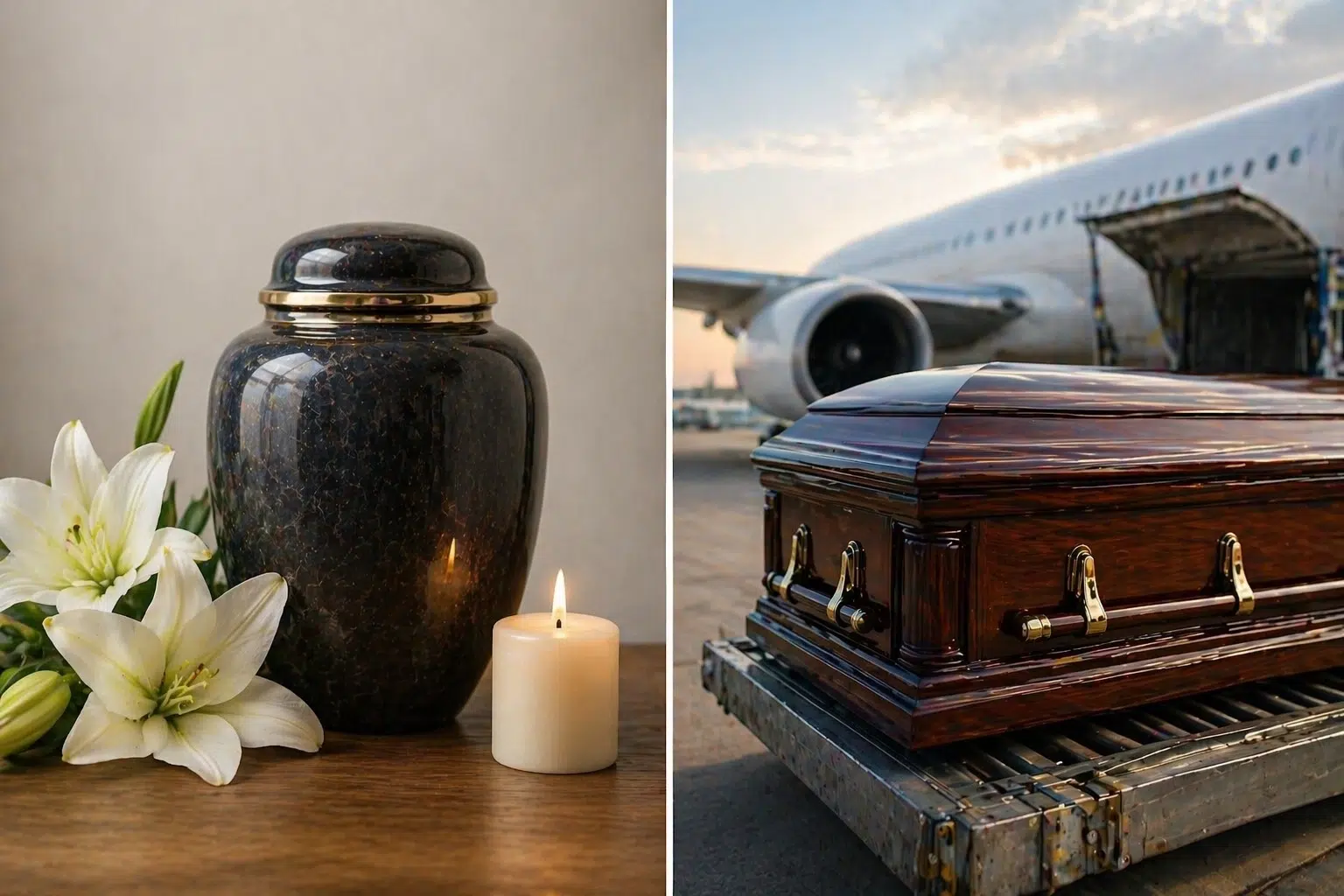
Losing a loved one is never easy. When that loss happens far from home, across international borders, families are thrust into a painful and often confusing decision: should the body be repatriated back to the home country, or should cremation take place abroad? Both options carry deep emotional, logistical, financial, and cultural weight. There is no universally correct answer, but there is a right answer for your family, your values, and your circumstances.
This guide breaks down both choices in detail so you can make the decision with clarity and confidence.
Understanding the Two Options
What Is Body Repatriation?
Body repatriation refers to the process of transporting the deceased from the country where death occurred back to their home country for burial or cremation. It is a formal, internationally regulated process that involves embalming, documentation, legal clearances, specialized coffin packaging, and coordination with airlines that carry human remains as cargo.
Repatriation is governed by strict protocols set out by organizations such as the International Air Transport Association (IATA), and each country may impose its own entry requirements for deceased persons. The process typically takes between five to fifteen business days depending on the countries involved, cause of death, and availability of documentation.
What Is Cremation Abroad?
Cremation abroad means the body is cremated in the country where death occurred, and the ashes (or cremated remains) are then transported back to the home country. Ashes are considerably easier and cheaper to transport than a full body. They can typically be carried as cabin luggage or checked baggage on a flight, provided they are in a sealed container approved for transport.
While this option is more straightforward logistically, it requires families to trust a cremation facility in a foreign country and, in some cases, relinquish the option of an open-casket funeral or traditional burial.
Cost Comparison
Cost is often the most immediate concern for families dealing with a death abroad. The financial difference between the two options can be significant.
Body repatriation typically costs anywhere from $3,000 to $15,000 or more depending on the distance, country of origin, airline cargo charges, embalming, zinc-lined coffin requirements, death certificates, translation fees, and local funeral director coordination at both ends. Some countries in the Middle East, Southeast Asia, and Africa can push these costs even higher due to limited airline options and complex bureaucratic requirements.
Cremation abroad followed by the transport of ashes is usually far more affordable, often ranging from $1,000 to $4,000 in total. The cremation itself may cost between $500 and $2,000 depending on the country, and transporting ashes internationally is significantly cheaper than transporting a full body. For families without travel insurance or repatriation coverage, this can be a decisive factor.
Cultural, Religious, and Emotional Considerations
For many families, cost is secondary to faith and tradition. Cultural and religious beliefs often make one option non-negotiable.
In Islam, cremation is strictly prohibited, and burial should happen as quickly as possible, ideally within 24 hours of death. For Muslim families, repatriation may be prioritized so the deceased can be buried in their home country according to Islamic rites. Similarly, Orthodox Jewish law (Halacha) prohibits cremation entirely. For Hindu, Sikh, and Buddhist families, cremation is not only permitted but often preferred, making cremation abroad a religiously valid option in many cases.
Beyond religion, there is a deeply human dimension to this decision. Many families feel strongly that their loved one should be buried in their homeland, near family, in a familiar cemetery, or according to community traditions. For others, the prospect of an open-casket funeral, a gathering of extended family, or observing specific mourning rituals makes repatriation essential to their grief process.
Cremation abroad, on the other hand, can allow families to hold a meaningful memorial service at home once the ashes arrive. Increasingly, families are choosing to scatter ashes at meaningful locations, divide remains among family members, or inter them in a columbarium. These options offer flexibility that traditional burial does not.
Logistical Complexity and Timelines
Repatriation is a logistically intensive process. It requires a death certificate issued in the country of death, a certificate of embalming, a certificate of non-contagious disease (in most cases), consular or embassy involvement, an import permit from the home country, proper packaging in a zinc-lined coffin sealed for air transport, and coordination with airlines that accept human remains as cargo. Any error or delay in documentation can set the process back by days or even weeks.
Cremation abroad requires fewer steps. The essential documentation includes the death certificate, confirmation of identity, and in some cases a cremation authorization from the next of kin or local authorities. Once cremation is complete, the ashes are typically placed in a sealed urn. Most airlines allow ashes to travel in carry-on bags provided the container passes X-ray screening. The US, UK, Australia, Canada, and most European countries allow the import of cremated remains with minimal paperwork.
If speed is a priority, cremation abroad is almost always the faster route. If preserving the body for a full traditional funeral at home is paramount, repatriation is the path to take, with the understanding that the process takes time and requires patience.
Insurance and Financial Planning
Travel insurance policies often include a repatriation benefit, which can cover a significant portion of the cost of returning remains to the home country. It is important to review what the policy covers. Some policies cover repatriation of the body, while others specifically cover only repatriation of ashes or limit coverage to certain causes of death.
Expatriate workers and international students are often advised to carry repatriation insurance specifically. In the absence of insurance, costs fall on the family, which can create financial strain during an already difficult time. Some embassies and consulates may offer limited financial assistance or guidance, though direct financial support is rare.
Country-Specific Challenges
The country where death occurs can significantly affect both options. In regions with limited cremation infrastructure, such as parts of rural Africa or the Middle East, finding a reliable and certified cremation facility may be difficult. In such cases, repatriation may be more practical, despite its higher cost.
Conversely, some countries have strict local burial requirements and may not release a body quickly for repatriation, particularly if the cause of death is under investigation. Autopsies, coroner inquiries, and legal proceedings can delay both options significantly.
Working with a reputable international repatriation service or funeral director with cross-border experience is invaluable in these situations. They understand local laws, have established relationships with local authorities, and can help navigate the process much faster than families attempting to coordinate alone.
Environmental Considerations
For environmentally conscious families, the carbon footprint of both choices may factor into the decision. Air transport of a body in a heavy zinc-lined coffin carries a substantial environmental cost. Cremation itself uses significant energy, though modern cremation facilities increasingly use cleaner technologies. Some families who choose cremation abroad specifically request eco-friendly or green cremation options where available.
So, Which Is Better?
There is no single correct answer. The better option depends on the intersection of several personal factors:
- Religious and cultural requirements that may make one choice non-negotiable
- The financial resources available and whether repatriation insurance is in place
- How quickly the family needs closure and whether a traditional funeral in the home country is important
- The country where death occurred and the practical options available there
- The wishes of the deceased if expressed during their lifetime
If cost and speed are primary concerns, and there are no strong religious objections, cremation abroad followed by transporting the ashes is usually the more practical solution. If preserving the body for burial at home, holding a traditional open-casket funeral, or adhering to specific religious rites is essential, then body repatriation is the appropriate choice regardless of the added complexity.
Most importantly, families should not try to navigate this process alone. Professional repatriation services, funeral homes with international experience, and embassy consular officers are all resources that can help ensure the process is handled with dignity, legality, and care.
Conclusion
Both cremation abroad and body repatriation are respectful options. The right choice depends on your beliefs, budget, and personal wishes. What matters most is that everything is handled with care and clarity.
If you are dealing with a loss abroad, you do not have to manage the process alone. Harmony International is a UK repatriation service that can support you at every step. They handle documentation, embalming, coordination with embassies and airlines, and the safe transport of your loved one back home. You also get 24/7 support and a single point of contact, so you always know what is happening.
With the right support, you can focus on honoring your loved one in the way that feels right for you.
Frequently Asked Questions (FAQs)
1. How long does body repatriation typically take?
The repatriation timeline varies widely depending on the countries involved, cause of death, and how quickly documentation is obtained. On average, the process takes five to fifteen business days, though complex cases involving autopsies or legal inquiries can take longer.
2. Can I carry ashes on a plane as cabin luggage?
In most countries, yes. Ashes in a sealed, X-ray screenable container can be carried as cabin luggage. It is advisable to carry the death certificate and cremation certificate alongside the ashes. Some countries may require additional documentation, so it is best to check airline and customs regulations before travel.
3. Are there religions that prohibit cremation?
Yes. Islam and Orthodox Judaism both prohibit cremation. For families from these faiths, body repatriation is the required choice. Catholic Christianity historically discouraged cremation but has permitted it since 1963 under certain conditions. Most Protestant Christian denominations, and Hindu, Sikh, and Buddhist traditions, accept or actively practice cremation.
4. What documents are required for body repatriation?
Typical documentation includes a certified death certificate, certificate of embalming, certificate of non-contagious disease, consular mortuary certificate, airline airway bill, passport of the deceased, and an import permit from the receiving country. Requirements vary by country, so always work with a professional repatriation service.
5. Does travel insurance cover repatriation costs?
Many comprehensive travel insurance policies include a repatriation benefit that covers either the return of the body or the ashes. Coverage limits, exclusions, and conditions vary widely between policies. Families should review their policy documents carefully and contact their insurer as soon as possible following a death abroad.
6. Can an embassy help with body repatriation?
Yes, embassies and consulates play an important role in the repatriation process. They can assist with verifying death certificates, issuing mortuary certificates, coordinating with local authorities, and providing a list of approved funeral homes or repatriation agencies. However, they do not typically cover the financial costs of repatriation.
7. What happens if I cannot afford repatriation?
If repatriation costs are prohibitive, cremation abroad and transporting the ashes is the most common alternative. Some families also explore local burial in the country where death occurred as a third option. Certain charitable organizations, employer benefit schemes, and community groups may offer financial assistance in exceptional circumstances.
Pages You Might Like:
UK repatriation services, Destinations We Repatriate, Into the UK, What to do when someone dies, Coffins we offer
 Call us
 Email us