



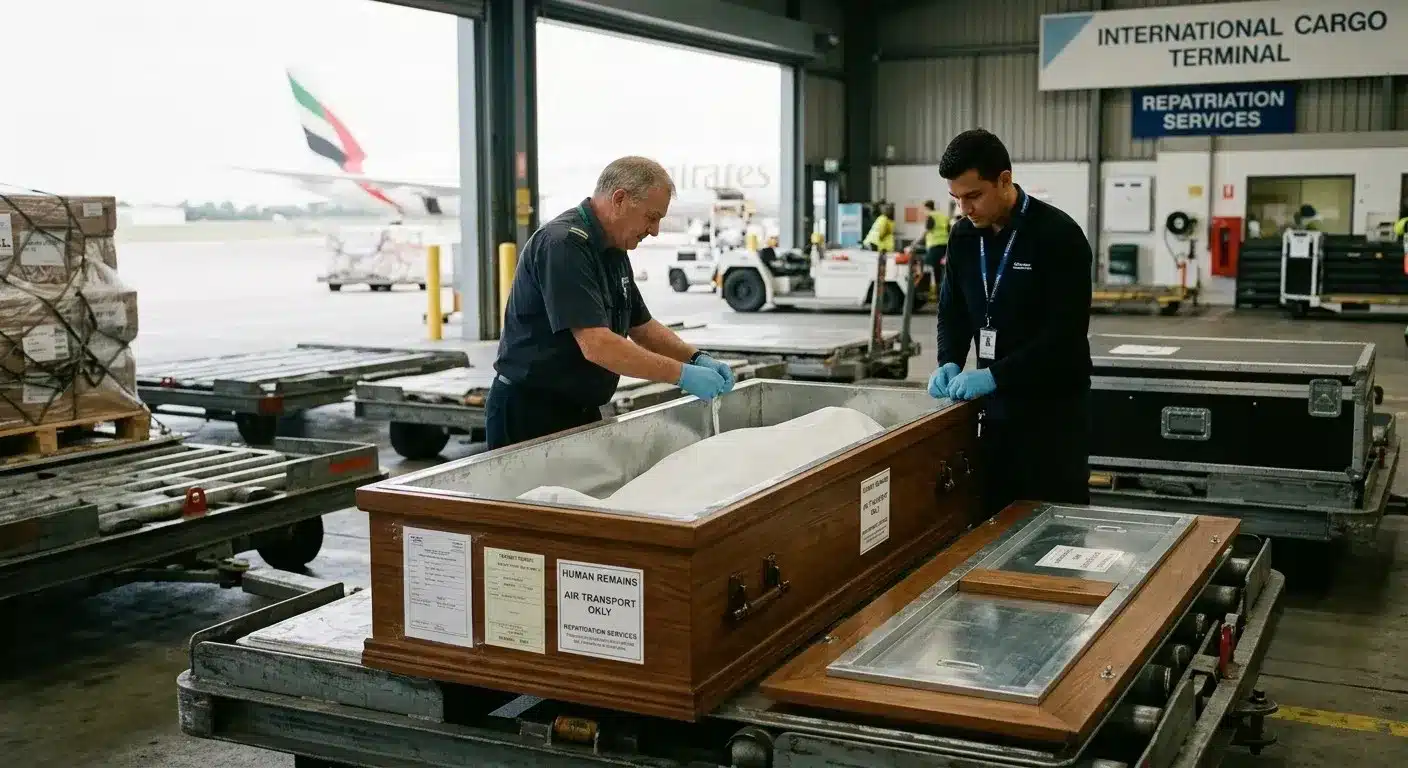
A zinc-lined coffin is used for international repatriation because aviation and public health regulations require any body transported by air across borders to be sealed inside an airtight, leakproof container. This prevents the escape of fluids or odour during transit, protects aircraft cargo holds and ground staff, and satisfies the entry requirements of the destination country’s customs and health authorities. It is not an optional extra chosen by a funeral director. It is a regulatory requirement built into international aviation law, and almost every repatriation from the UK involves one. This guide explains exactly what a zinc-lined coffin is, why the rule exists, how the sealing process works, and what it means for your family’s arrangements.
What a Zinc-Lined Coffin Actually Is
A zinc-lined coffin looks like an ordinary wooden coffin from the outside, but it contains an inner lining of thin zinc or metal sheeting that is soldered shut around the body, creating a completely sealed, hermetic barrier. This zinc liner sits inside a solid wooden outer coffin, which is the part that is visible during any viewing or service. In some cases the liner is fitted into a simple transit coffin purely for the flight, while in others the family’s chosen presentation coffin itself is zinc lined so the same coffin can be used for both transport and the funeral service on arrival.
The Main Reasons Zinc Lining Is Required
The requirement exists for a combination of practical, hygiene, and safety reasons that apply to any international air shipment of human remains.
- It prevents any leakage of bodily fluids during transit, which is essential for hygiene and dignity.
- It contains odour completely, which matters significantly on long haul flights lasting many hours.
- It protects other cargo, ground handling staff, and aircrew from any contact with the deceased.
- It satisfies public health rules enforced by both the departure country and the receiving country’s customs authority.
- It is built to withstand the pressure changes that occur inside an aircraft cargo hold at cruising altitude.
The International Rules Behind the Requirement
This is not a rule set by individual funeral directors. It comes from international civil aviation law, specifically the International Civil Aviation Organisation’s Annex 9284 guidance and the International Air Transport Association’s Dangerous Goods Regulations, which classify human remains shipments under a specific handling category. In practice, this means a body is booked as cargo under the code HUM, which triggers a distinct set of packaging, paperwork, and handling procedures from acceptance at the cargo terminal through to unloading at the destination. Most countries require the zinc seal as standard, and it becomes an absolute requirement whenever the transit time exceeds twenty four hours, when the journey originates from a hot climate country, or when the death resulted from a notifiable infectious disease.
How the Sealing Process Works
The preparation of a zinc-lined coffin follows a defined sequence that a licensed mortuary or funeral director carries out before the coffin is ever taken to the airport.
- Embalming is carried out first, since most countries require preserved remains before a coffin can be sealed for transport.
- The body is placed inside the zinc liner along with absorbent material to contain any fluid released during the flight.
- A pressure relief valve is fitted to the lid to safely vent any gases produced naturally during transit.
- A certified professional solders the zinc liner completely shut, often in the presence of a witness or official.
- The sealed liner is placed inside the solid wooden outer coffin that will be used on arrival.
- A formal sealing certificate and act are issued, and these documents travel with the body as part of the cargo paperwork.
Without this certificate, airlines will not accept the shipment under the HUM code, and customs authorities at the destination will not release the coffin, so the paperwork is just as important as the physical sealing itself.
Zinc Liner Versus Zinc Cad-Seal
Families sometimes have a choice between two sealing methods. A standard soldered zinc liner is fully permanent and cannot be reopened once sealed. A zinc cad-seal uses a cadmium based seal instead, which still meets airline regulations but can be opened again by the receiving funeral director once the coffin arrives, making it a popular option where the family wants to hold a viewing or open casket service at home. Harmony International’s own comparison guide on wood versus metal coffins for repatriation explains this distinction in more detail, along with the cost and durability differences between the two materials.
Does This Affect the Funeral Arrangements in the UK or Abroad
A zinc-lined coffin does not have to change how the funeral itself looks or feels. Families can choose a presentation coffin, meaning the deceased arrives in the same coffin that will be used for the service, or a simpler transit coffin, meaning the receiving funeral director transfers the body into a new coffin after arrival, which adds a small additional cost. Either way, once the coffin has cleared customs and reached the receiving funeral home, the zinc liner can be opened by a licensed professional if a viewing has been requested and the cad-seal method was used, restoring a normal funeral experience for the family.
What This Means for Cost and Timing
The zinc lining and sealing process is included as a standard line item in almost every repatriation quote, since it is a fixed regulatory requirement rather than an optional upgrade. It typically adds a modest amount to the overall cost compared with the embalming, flight, and documentation fees, and it does not usually add extra time to the process when handled by an experienced funeral director, since sealing happens alongside embalming rather than as a separate later step.
Getting the Coffin Right With Specialist Support
Because the zinc-lining requirement is tied directly to airline acceptance and customs clearance, getting it wrong, or working with a provider unfamiliar with the process, can cause serious delays at the departure or arrival airport. Harmony International prepares every repatriation coffin to full IATA and international aviation standards, handling embalming, sealing, and documentation together as one coordinated process. Their coffin requirements guide sets out the options available, and their overview of airport security procedures for human remains explains what happens to the coffin once it reaches cargo screening.
If your family needs to arrange repatriation now, contact Harmony International for twenty four hour support and see exactly what is included for your destination country.
Frequently Asked Questions
Is a zinc-lined coffin always required for international repatriation?
In almost every case, yes. Airlines and most countries require a hermetically sealed, zinc-lined coffin for any international transport of human remains by air.
Can a zinc-lined coffin be opened for a viewing after arrival?
Yes, if a zinc cad-seal was used instead of a fully soldered liner, a licensed funeral director can reopen it once the coffin has cleared customs.
Does zinc lining add much to the cost of repatriation?
It typically adds a modest, fixed amount compared with embalming, flight, and documentation costs, and is included as standard in most repatriation quotes.
Is embalming required alongside a zinc-lined coffin?
Yes, most countries require the body to be embalmed before it is placed in the sealed zinc liner for international transport.
What happens if a coffin is not properly sealed?
Airlines will refuse to accept it under the required cargo handling code, and customs authorities at the destination will not release it, causing significant delay.
Who can help arrange a compliant coffin for repatriation?
Specialist providers such as Harmony International prepare coffins to full international aviation standards and handle the certification alongside embalming and documentation.
 Call us
 Email us