



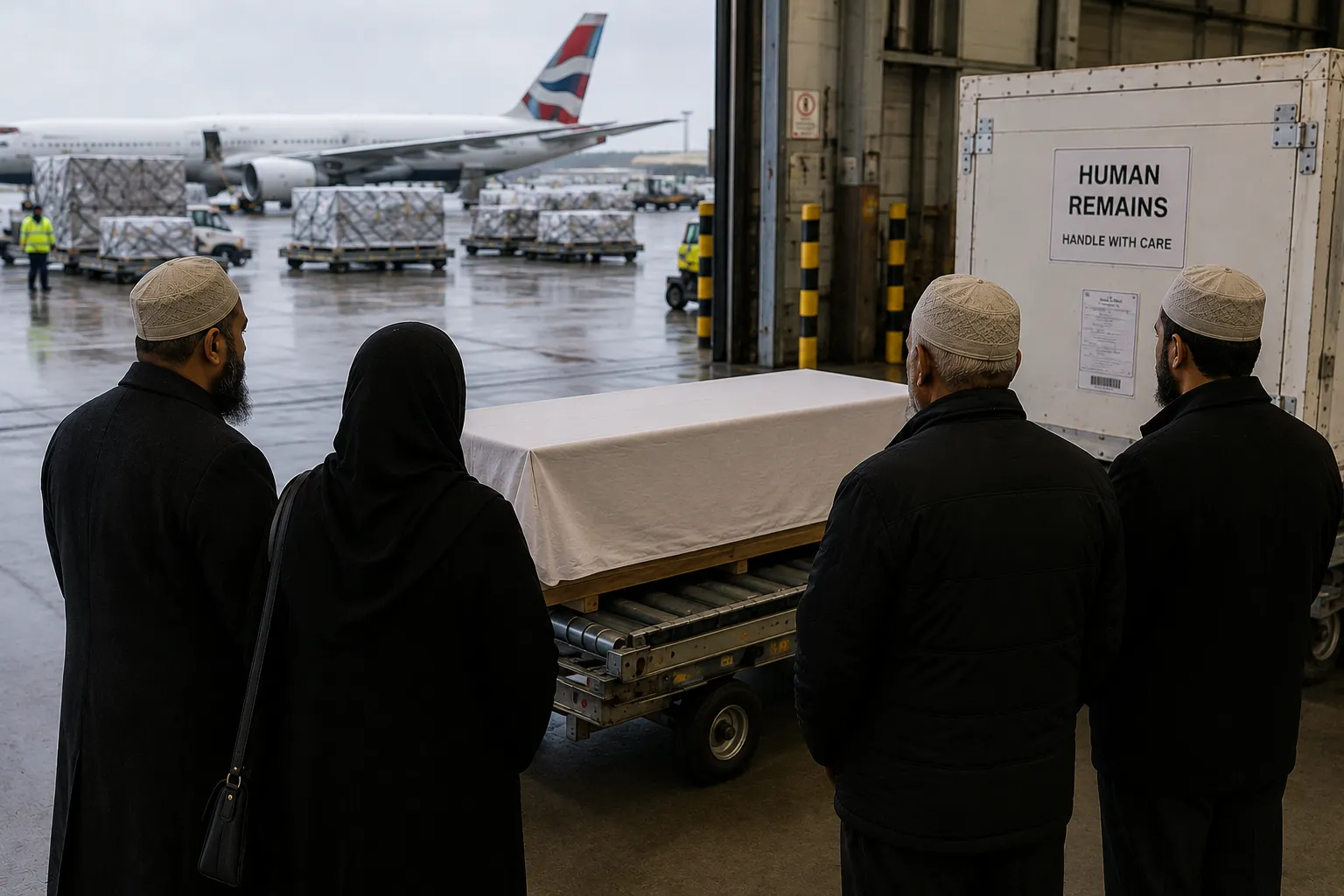
When a Muslim relative passes away in the UK and the family decides that burial should take place in their country of origin, the process is called repatriation. For British Muslim families with roots in Pakistan, Bangladesh, India, Somalia, and many other countries, sending a loved one home for burial remains a deeply personal and often religious decision. Yet the process is rarely simple. It involves the coroner, the destination country’s embassy, specialist funeral directors, airlines, and a set of Islamic requirements around how quickly burial should ideally happen. This guide explains, in plain and practical language, exactly what Muslim families in the UK need to know before, during, and after arranging repatriation, so the process feels less overwhelming during an already painful time.
What Does Muslim Repatriation From the UK Actually Mean
Repatriation refers to the legal and logistical process of transporting a deceased person’s body from the UK to another country for burial. It is different from a UK based Islamic funeral, which follows the same core rites of ghusl, kafan, and janazah prayer but ends in burial at a local Muslim cemetery instead of a flight abroad. Many British Muslim families now choose local burial because Islamic burial sections and Muslim funeral facilities have become widely available across the UK in recent years. Even so, thousands of families each year still choose repatriation, often because the deceased expressed a clear wish to be buried near ancestors, because close family still lives abroad, or because a family grave already exists in the home country.
Islamic Guidance on Burial Timing and Repatriation
Islamic teaching places strong emphasis on burying the deceased as soon as possible. Many scholars cite the well known hadith instructing the community to hasten the funeral rites rather than delay them. This creates a genuine tension with repatriation, since paperwork, embassy clearance, and flight arrangements can take several days or longer. Most scholars agree that a short, necessary delay caused by legal or logistical requirements is permissible, particularly when family members need time to travel or when documentation must be completed correctly before a body can legally leave the country.
- Islam encourages burial as soon as reasonably possible, ideally within a day or two of death.
- A short delay is generally permitted when it is genuinely necessary for legal or travel reasons.
- Embalming is discouraged in traditional Islamic practice but is required by airlines for transport.
- A zinc lined, hermetically sealed coffin is mandatory for any international air transport of remains.
- Ghusl and kafan can usually still be performed by the family before embalming takes place.
Because of this, most experienced Islamic funeral directors will discuss embalming sensitively with the family, explain exactly why it is required under airline and international transport rules, and try to keep the process as close to Islamic tradition as circumstances allow.
The Legal Process, Step by Step
When someone dies in the UK and the family intends to repatriate the body, a defined legal sequence must be followed before the body can leave the country. Skipping a step, or getting the order wrong, is one of the most common causes of delay.
- Register the death with the local registrar in England, Wales, or Scotland, within the statutory time limit, and obtain certified copies of the death certificate.
- Notify the coroner if the death was sudden, unexplained, or if no doctor had treated the deceased recently, since the coroner must issue clearance before removal abroad.
- Contact the embassy or consulate of the destination country in London to confirm the specific documents and No Objection Certificate they require.
- Instruct a funeral director experienced in Islamic repatriation, who can coordinate ghusl, kafan, embalming, and coffin preparation together.
- Arrange embalming and a zinc lined coffin that meets International Air Transport Association standards for human remains.
- Book the flight as human remains cargo through the airline’s bereavement or cargo desk, alongside any accompanying family passengers.
- Coordinate with a receiving funeral director or family member in the destination country to arrange collection and burial on arrival.
You can read the official step by step guidance on registering a death and on what happens when the coroner becomes involved directly on GOV.UK, alongside general advice on international repatriation from the Foreign, Commonwealth and Development Office.
Documents You Will Usually Need
Every destination country sets its own exact paperwork requirements, but most Muslim families repatriating a body from the UK should expect to gather the following.
- A certified death certificate issued by the UK registrar, together with several extra certified copies.
- A coroner’s certificate or notice confirming there is no objection to the body leaving the country.
- A certificate of embalming confirming the body has been prepared to international transport standards.
- A freedom from infection certificate signed by a registered doctor for the destination authorities.
- The deceased’s passport or another valid form of identification and travel documentation.
- Consular authorisation or a No Objection Certificate issued by the destination country’s embassy in the UK.
- An air waybill and cargo documentation issued once the airline confirms the human remains booking.
A specialist repatriation provider will normally prepare and submit most of this paperwork on the family’s behalf, which is one of the main reasons families choose professional support rather than attempting it alone.
Financial Support Available to Families
Repatriation is expensive, and many families are unaware of the support that may be available to them.
- Check the deceased’s travel, life, or bank issued insurance policies, since some include repatriation cover as standard.
- Funeral Expenses Payment from the Department for Work and Pensions may help eligible families cover some funeral related costs.
- Bereavement Support Payment a separate benefit that some surviving spouses or civil partners may be entitled to claim.
- Families in Scotland should also check the Funeral Support Payment administered by Social Security Scotland.
- Local mosques, community welfare funds, and some Islamic charities also assist families with repatriation costs where needed.
Choosing the Right Funeral Director for Islamic Repatriation
Not every funeral director has genuine experience with Muslim repatriation, so it is worth asking direct questions before instructing anyone.
- Ask whether the funeral director regularly handles Muslim repatriation cases to your specific destination country.
- Confirm they can arrange ghusl and kafan before embalming, respecting Islamic ritual requirements wherever possible.
- Check they have established relationships with the relevant embassy, airlines, and receiving agents abroad.
- Look for a team offering twenty four hour support, since deaths and documentation deadlines do not follow office hours.
Providers such as Harmony International specialise in exactly this kind of case, with a multilingual team experienced in supporting Asian and Muslim communities through embassy coordination, documentation, embalming, and flight arrangements.
A Note on Timing and Emotional Wellbeing
Families often feel torn between the Islamic preference for a swift burial and the practical reality that repatriation takes time. This tension is normal and widely recognised within the Muslim community. Speaking early with a local imam or scholar, alongside an experienced funeral director, can help families make a decision that respects both religious guidance and the practical steps required by UK and international law. Being informed in advance, ideally before a death occurs, is the single most effective way to reduce stress and avoid unnecessary delay later.
Final Thoughts and Next Steps
Repatriating a loved one from the UK for Muslim burial is a process built from many small legal steps, each of which must be completed correctly and in the right order. Understanding the coroner’s role, the documents required, realistic costs and timelines, and the financial support available can make an overwhelming process feel manageable. If your family is facing this decision now, or wants to plan ahead, speaking to a specialist repatriation team early will save time and reduce stress considerably.
If you need guidance today, contact Harmony International for twenty four hour support, view their full documentation checklist, read more on how the repatriation process works, or request a repatriation quote to understand the cost for your family’s specific destination country.
Frequently Asked Questions
How long does Muslim repatriation from the UK usually take?
Most straightforward cases take between five and fourteen days from death to arrival in the destination country. A coroner investigation or missing paperwork can extend this timeline.
Is embalming allowed in Islam for the purpose of repatriation?
Embalming is generally avoided in Islamic tradition but is accepted as a necessary exception when international airline and transport regulations require it for repatriation.
What documents are needed to repatriate a Muslim body from the UK?
Families typically need a certified UK death certificate, coroner clearance, an embalming certificate, a freedom from infection certificate, identification documents, and authorisation from the destination country’s embassy.
How much does it cost to repatriate a Muslim body from the UK?
Costs generally range from £3,000 to £8,000, with repatriation to Pakistan or Bangladesh commonly costing between £3,500 and £5,500 depending on the airline and route.
Can ghusl and kafan still be performed before repatriation?
Yes, an experienced Islamic funeral director can usually arrange ghusl and kafan before the body is embalmed and placed in a transport coffin.
Does the coroner always need to be involved in repatriation cases?
The coroner must be notified whenever a death is sudden, unexplained, or was not recently seen by a treating doctor, and their clearance is required before a body can leave the UK.
Who can help my family arrange Muslim repatriation from the UK?
Specialist providers such as Harmony International manage the full process end to end, including embassy coordination, documentation, embalming, coffin preparation, and flight arrangements, so families can focus on grieving rather than paperwork.
Pages You Might Like:
UK repatriation services, Destinations We Repatriate, Into the UK, What to do when someone dies, Coffins we offer
 Call us
 Email us