



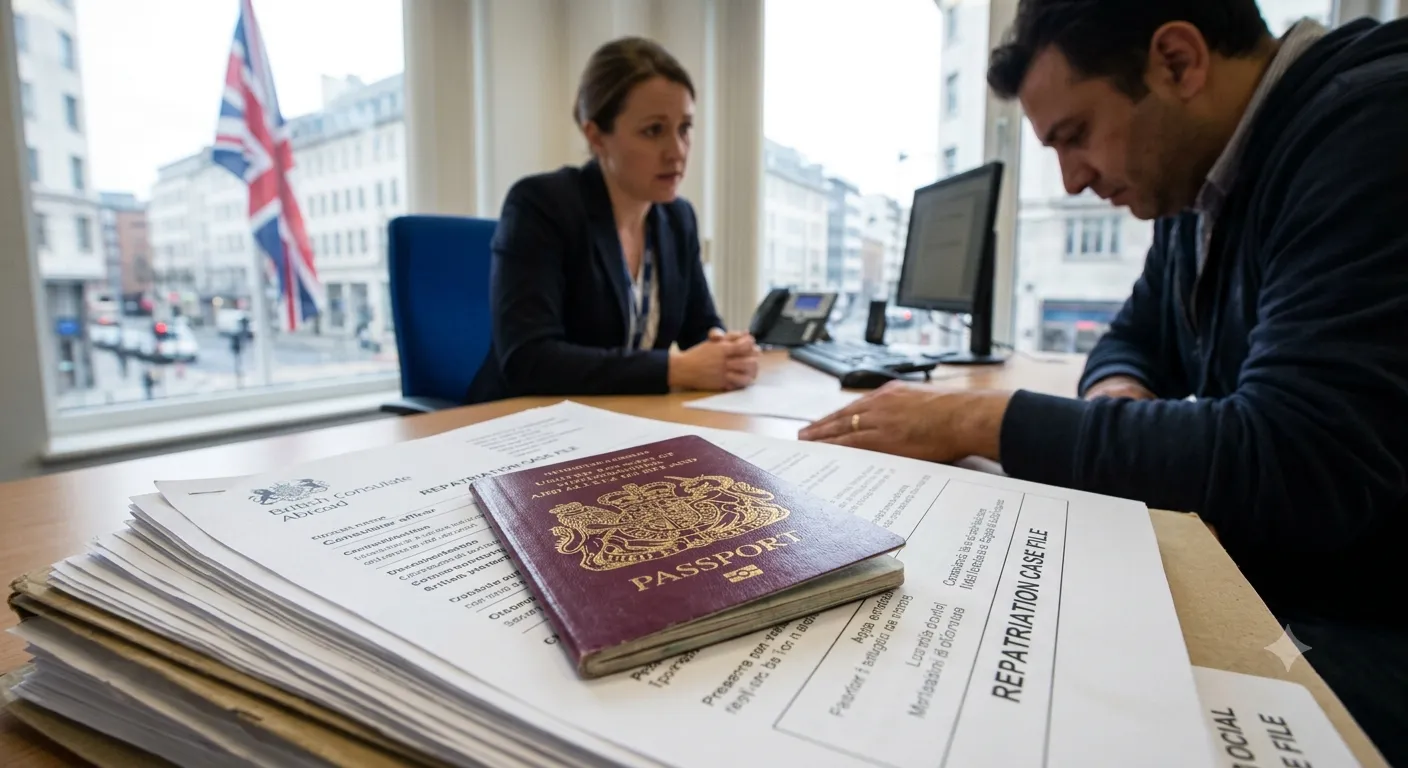
When someone dies abroad, families expect grief to be the hardest part. For some, the harder part turns out to be waiting, sometimes for weeks or months, while a foreign government withholds their loved one’s body. A country refusing to release remains for repatriation is rare but not unheard of, and it usually has less to do with cruelty and more to do with law, bureaucracy, unpaid debts, or an unresolved investigation. Understanding why this happens, and what families and consulates can actually do about it, makes an unbearable situation slightly easier to navigate.
In short, a country can lawfully delay or refuse to release a body when a criminal or coronial investigation is open, when local documentation such as a death certificate or autopsy report has not been completed, when hospital or mortuary bills remain unpaid, when a family dispute over the remains exists, or when local health regulations restrict transport. The Foreign, Commonwealth and Development Office can offer consular support and liaise with local authorities on behalf of British nationals, but it has no power to overturn another country’s legal decisions or speed up its investigations.
Why Would a Country Refuse to Release a Body?
Every country applies its own laws to a death that occurs on its soil, regardless of the nationality of the person who died. This means the pace and the rules of releasing a body are set entirely by local authorities, not by the family’s home government. Several recurring reasons explain most delays and refusals.
- An open criminal or coronial investigation into the cause of death can hold up release for weeks, particularly where the death was sudden, violent, or unexplained.
- A mandatory autopsy required under local law must be completed and signed off before any funeral director can begin repatriation paperwork.
- Unpaid hospital, mortuary, or funeral home bills can lead some facilities to withhold remains until the account is settled in full.
- Disputes between family members over who has the legal right to decide on burial, cremation, or repatriation can freeze the process indefinitely.
- Missing or incomplete documentation, such as a cause of death not clearly stated on the certificate, can cause the receiving country’s customs authorities to reject the shipment.
- Public health rules, including restrictions around infectious disease or embalming standards, can prevent a body from being cleared for international transport.
In conflict zones or during diplomatically sensitive periods, repatriation can also be delayed or used as a bargaining tool between governments, though this is far less common than the administrative reasons above.
Who Actually Controls the Decision to Release a Body?
Jurisdiction over the investigation into a death, and therefore over when a body can be released, sits with the country where the death occurred. This is a point the FCDO makes clear in its guidance for bereaved families, noting that it cannot interfere in another country’s investigative or judicial processes and that the foreign authority is under no obligation to share updates on request. Consular staff can chase for information, request updates, and explain the local process, but they cannot force a hospital, mortuary, coroner, or police force in another country to act faster or hand over remains before local law allows it.
This can be one of the most frustrating parts of the process for families, who understandably expect their government to be able to intervene. In practice, diplomatic pressure is limited to formal requests for updates and, in the most serious or high-profile cases, ministerial involvement. Even then, the final decision remains with the country holding the body.
What Consular and Government Support Is Actually Available?
British nationals and their families are not left to navigate a refusal alone. Consular staff have a defined, if limited, role that focuses on information, coordination, and welfare rather than legal intervention.
- Consular staff can contact local authorities to ask for updates on an investigation or autopsy and explain what is causing the delay in plain terms.
- They can provide lists of local funeral directors, translators, and lawyers experienced in supporting foreign nationals through repatriation, detailed in the official guide to support for British nationals abroad.
- They can keep the family in the UK updated and act as a point of contact between the family and the consulate on the ground until the body is released.
- In cases of genuine financial hardship, a small, means-tested grant may be available, though this rarely covers the full cost of repatriation.
What consular staff cannot do is pay outstanding bills, settle legal disputes, override a coroner’s decision, or guarantee a release date. The Royal British Legion’s guidance on repatriation confirms that the government will not pay burial, cremation, or repatriation expenses, or settle debts on a family’s behalf, even in distressing cases of delay.
What Can Families Do While a Body Is Being Withheld?
Waiting is difficult, but there are practical steps that genuinely help move a delayed case forward rather than leaving it entirely in the hands of local officials.
- Contact the nearest embassy, high commission, or consulate as early as possible, since consular staff can only help once they know a case exists and have been given consent to act.
- Instruct a funeral director experienced in international repatriation, since local relationships with mortuaries, coroners, and airlines often move paperwork faster than a family working alone.
- Keep copies of every document issued locally, including the death certificate, autopsy report, and any police reference numbers, since missing paperwork is one of the most common causes of further delay.
- Check any travel insurance policy immediately, since many policies include a 24 hour emergency assistance line that can coordinate directly with local hospitals and authorities.
- Ask the consulate for a named point of contact and request regular updates in writing, which creates a clear record if the case needs to be escalated later.
Specialist repatriation companies are often the most valuable resource in this situation, because they deal with foreign mortuaries, embassies, and airlines on a daily basis and understand exactly which documents each country requires.
How Long Can a Country Legally Hold a Body?
There is no single global time limit, since every country sets its own rules around investigations, autopsies, and documentation. A straightforward natural death with no investigation can sometimes be repatriated within a week, while a case involving a criminal investigation, a disputed cause of death, or missing paperwork can take months.
Cases in the Middle East, for example, are often resolved quickly once an autopsy is not required, while investigations in other regions can stretch on for a considerable time before a death certificate is finalised and accepted by customs in the receiving country.
Getting Expert Help With a Difficult Repatriation
Because every country applies different rules, families dealing with a refusal or a lengthy delay benefit enormously from working with a specialist who has handled similar cases before.
Harmony International has extensive experience coordinating with foreign mortuaries, embassies, coroners, and airlines to bring loved ones home, even in complex cases involving investigations, disputed documentation, or delayed autopsies.
Their team understands the paperwork each country demands and can liaise directly with local authorities on the family’s behalf, reducing the burden on relatives who are already coping with grief and distance.
Frequently Asked Questions
- Can a country legally refuse to release a body forever?
No. A country can delay release while an investigation, autopsy, or documentation issue is resolved, but it cannot indefinitely withhold a body without legal grounds. Once local requirements are satisfied, the remains must be released to the legally recognised next of kin or their representative.
- Can the UK government force another country to release a body?
No. Jurisdiction over a death remains with the country where it occurred, and the FCDO cannot interfere in another country’s investigative or judicial process. Consular staff can request updates and support the family, but the final decision sits with local authorities.
- What is the most common reason for a repatriation delay?
Incomplete or inaccurate documentation, particularly a death certificate that does not clearly state the cause of death, is one of the most common reasons a receiving country’s customs authority rejects a repatriation and sends the paperwork back for correction.
- Will travel insurance cover repatriation if a body is delayed?
Many travel insurance policies include repatriation cover and a 24 hour assistance line, but coverage varies significantly by provider and policy. Families should contact the insurer immediately after a death abroad to confirm exactly what is included.
- Can unpaid hospital bills stop a body being released?
In some countries, yes. Certain hospitals and mortuaries can withhold remains as security against unpaid fees, which is why confirming outstanding costs early, and involving a repatriation specialist or the consulate, can help prevent this becoming a lasting obstacle.
- Who has the legal right to decide on repatriation if the family disagrees?
This depends on the deceased’s will, local law, and the laws of the country handling the case. Where family members disagree, resolving the dispute usually requires legal advice in both the country of death and the home country before authorities will release the remains.
Pages You Might Like:
UK repatriation services, Destinations We Repatriate, Into the UK, What to do when someone dies, Coffins we offer
 Call us
 Email us