



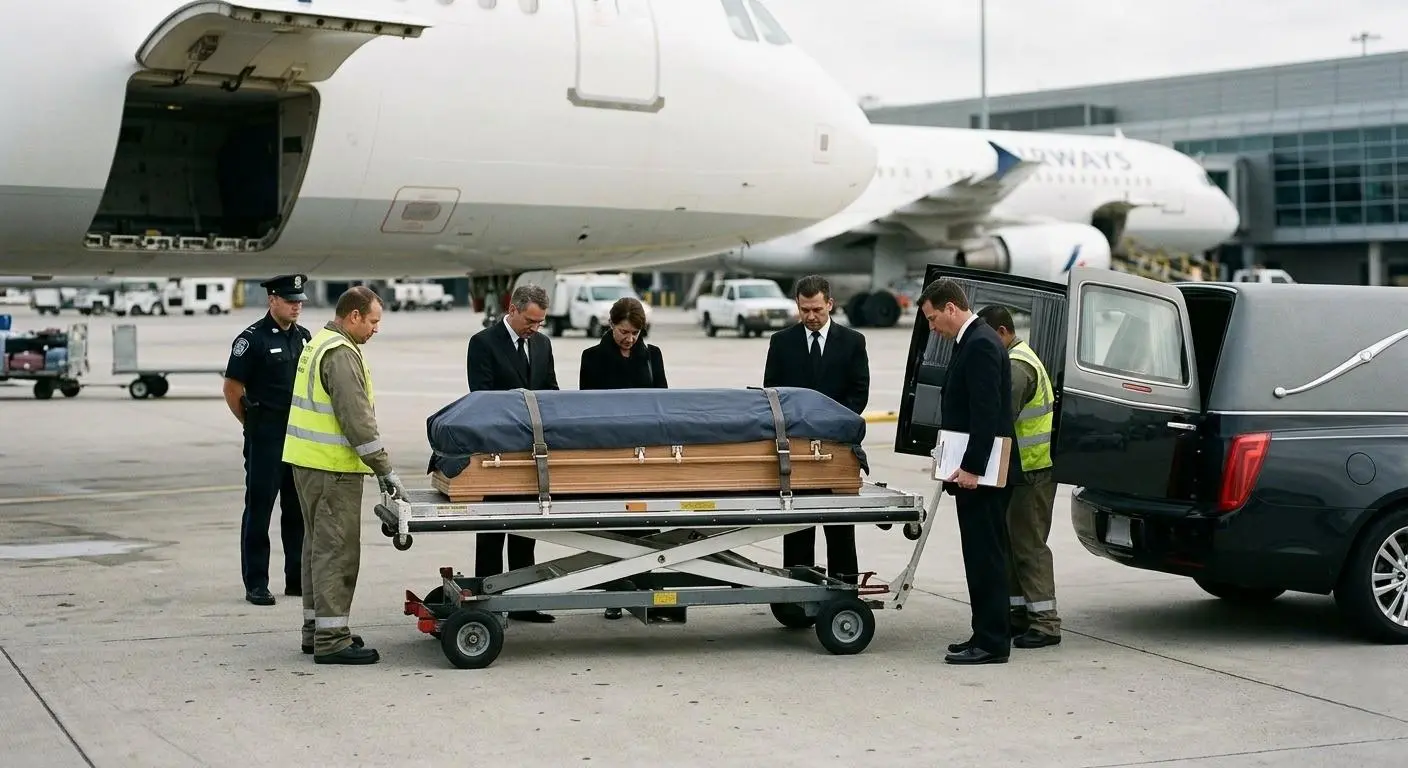
Repatriation, the process of transporting the remains of a deceased person back to their home country, is one of the most complex and emotionally charged logistical processes a family can face.
It involves coordinating across multiple countries, government agencies, funeral homes, airlines, and legal systems, often under strict time pressure and in the depths of grief.
This blog explores the full scope of what death repatriation involves, why the process is so challenging, and how families can get the support they need during one of the most difficult moments of their lives.
What Is Repatriation?
Repatriation refers to the formal process of returning the mortal remains of a person who has died in a foreign country to their country of origin or the country where their family resides. The remains may be repatriated as a body for burial or cremation, or as ashes following cremation in the country where the death occurred.
The process is entirely distinct from standard international travel logistics. It requires compliance with the legal requirements of both the country where the death occurred and the receiving country, coordination with embassies and consulates, the preparation and embalming of the body, specialist air freight arrangements, and a significant volume of official documentation.
Families are rarely prepared for this. Most people have never had to deal with the death of a relative overseas and have no knowledge of the process, the costs involved, or who to turn to for help.
Why Is Death Repatriation Difficult?
There are several layers of complexity that make why is repatriation difficult such a common question among bereaved families. Each layer requires careful handling, often simultaneously and within tight timeframes.
- Legal and regulatory requirements. Every country has its own laws governing what must happen when a foreign national dies on its soil. Authorities may require a local death certificate, a police report if the death was sudden or unexplained, a post-mortem or autopsy, and official permission to release the body for repatriation. In some countries, these processes can take days or even weeks to complete.
- Documentation requirements. Repatriating remains requires an extensive set of documents, including a certified death certificate from the country of death, a certificate of embalming, a certificate of freedom from infection, a laissez-passer (a formal permission to transport the body), and import permits from the receiving country. Gathering and authenticating all of these documents correctly is a time-consuming and detail-intensive task.
- Language barriers. When a death occurs in a country where the family does not speak the local language, every interaction with authorities, hospitals, funeral homes, and airlines becomes significantly more difficult. Errors in documentation caused by translation issues can cause serious delays.
- Time sensitivity. The repatriation of a body needs to happen within a defined window. Embalming can only preserve remains for a limited period, and families naturally want to bring their loved one home as quickly as possible. Yet the legal and administrative processes involved do not always move at the pace grieving families need.
- Religious and cultural considerations. Many families have specific religious requirements around how the body must be treated, how quickly burial must take place, and what preparations are appropriate. Coordinating these requirements across two different countries, cultures, and sets of funeral practices adds another layer of complexity to an already difficult process.
The Role of Embassies and Consulates
When a national dies abroad, the relevant embassy or consulate in the country of death becomes an important point of contact. Consular staff can assist with registering the death, contacting next of kin, issuing emergency travel documents if family members need to travel to the country, and providing information about local funeral homes and repatriation services.
However, it is important to understand that embassies do not manage the repatriation process itself and they do not cover the costs involved. Their role is primarily one of guidance and liaison. The practical, logistical, and financial burden falls on the family or on any travel insurance policy the deceased held.
This is why many families turn to specialist repatriation companies, who can act on behalf of the family and manage the entire process from start to finish.
The Cost of Repatriating Remains
Death repatriation is expensive. The total cost depends on a number of variables, including the country where the death occurred, the distance the remains need to travel, the mode of transport, the time taken for local legal processes, and whether cremation takes place before or after repatriation.
Costs typically include the local death certificate and any required post-mortem, embalming and preparation of the body, a specialist repatriation casket or zinc-lined coffin approved for international air travel, air freight charges, documentation and consular fees, local funeral director fees, and fees in the receiving country for receiving and transferring the remains.
The total bill can run into several thousands of pounds or dollars, and in some cases considerably more for deaths occurring in remote locations or countries with complex legal systems. This is one of the strongest arguments for ensuring adequate travel insurance that includes repatriation cover before travelling abroad.
Travel Insurance and Repatriation Cover
A good travel insurance policy with repatriation cover can make an enormous difference to a bereaved family. When cover is in place, the insurer typically takes on the responsibility of coordinating the repatriation process and covering the associated costs, removing a significant burden from the family at the worst possible time.
However, families are often surprised to discover gaps in their cover. Some policies exclude deaths related to pre-existing medical conditions. Others have geographical exclusions or cap the amount payable for repatriation expenses. Policies taken out for short holidays may not cover extended stays or working abroad.
If no insurance is in place, the full cost and coordination of repatriation falls to the family. In these circumstances, working with an experienced repatriation specialist is not just helpful, it is essential.
How Long Does Death Repatriation Take?
The timeline for repatriation varies considerably depending on the country where the death occurred, whether the cause of death is clear or requires investigation, the efficiency of local authorities, and the completeness of the required documentation.
In straightforward cases where the death was from natural causes, all documentation is in order, and the country of death has efficient administrative processes, repatriation can sometimes be completed within a few days. In more complex cases involving sudden or unexplained deaths, countries with slower bureaucratic processes, or significant language and communication barriers, the process can take two to four weeks or longer.
Working with a specialist repatriation service can significantly reduce these timelines, as experienced professionals know exactly what is required in each country, have established relationships with local authorities and funeral homes, and can anticipate and resolve problems before they cause delays.
Supporting the Family Through the Process
It is easy to get lost in the logistics of death repatriation and forget that behind every case there is a family in profound grief. The administrative demands of the process are relentless, and they arrive at a time when people have the least capacity to deal with them.
Families may need to make urgent decisions about cremation versus body repatriation, select a funeral home in a country they have never visited, communicate with foreign authorities in a language they do not speak, and manage the expectations of extended family and friends back home who are also grieving and seeking answers.
A compassionate and experienced repatriation specialist takes as much of this burden as possible off the family, acting as a single point of contact who manages every aspect of the process on their behalf. The difference between having that support and navigating the process alone is immeasurable.
Expert Support Makes All the Difference
Death repatriation is undeniably one of the most complex processes a family can face. It combines legal, administrative, logistical, financial, and deeply personal challenges at a time of acute grief. The sheer number of steps involved, spanning multiple countries, languages, and institutions, means that without the right guidance, families can feel completely overwhelmed.
Understanding the process in advance, securing adequate travel insurance, and knowing who to call in an emergency can make an enormous difference. But when the unthinkable happens, what families need most is a trusted partner who will take charge, communicate clearly, and handle everything with professionalism and sensitivity.
Harmony International specialises in guiding families through the full death repatriation process with care, expertise, and compassion. From the moment you make contact, their experienced team takes over the coordination of every step, working tirelessly to bring your loved one home with dignity. You do not have to face this alone.
Contact Harmony International today for expert, compassionate repatriation support.
Pages You Might Like:
UK repatriation services, Destinations We Repatriate, Into the UK, What to do when someone dies, Coffins we offer
 Call us
 Email us