



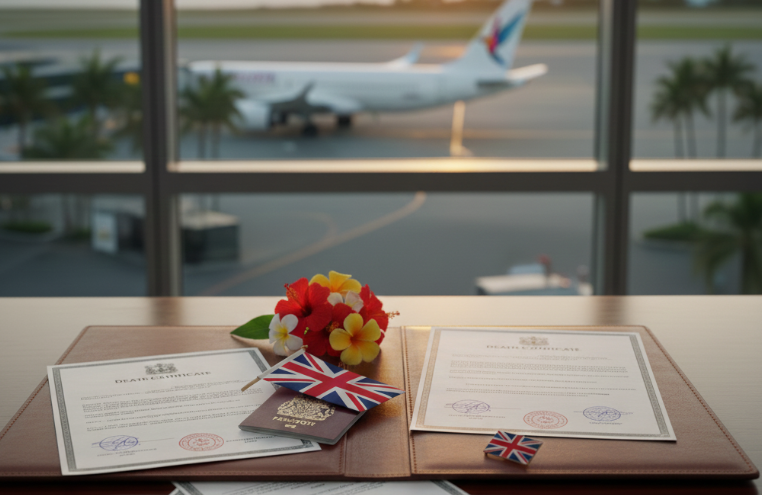
Repatriating a loved one from the United Kingdom to a Caribbean nation involves several legal and logistical steps. Each country has its own requirements, but many follow similar procedures. Understanding what happens at each stage helps families prepare with confidence.
1. Registering the Death in the UK
A doctor or coroner first issues a medical certificate confirming the cause of death. The next step is registering the death with a local registry office. Families can review the registration requirements, documentation standards and information about obtaining certified copies on GOV.UK
It is common to request several certified copies because Caribbean health authorities, consulates and airlines usually need original documents during clearance.
2. Coordinating With a Repatriation Specialist
Repatriation from the UK to the Caribbean requires coordination between coroners, airport authorities, airline handling teams and the receiving consulate.
A specialist manages these steps and ensures that the UK-side procedures follow the established requirements under the guidance provided by the Foreign, Commonwealth & Development Office, including those found in its repatriation information for deaths abroad
This support helps avoid delays and ensures that all paperwork is approved before travel arrangements are confirmed.
3. Collecting the Documents Required for Caribbean Entry
Caribbean nations follow a structured document process before remains can enter the country. These generally include:
- A certified UK death certificate
- Passport of the deceased
- Embalming certificate
- Certificate of freedom from infection
- Sealed coffin certificate
- Coroner’s Out of England certificate
- Consular or diplomatic authorisation
- Flight documentation
The need for these documents aligns with the export conditions referenced in the UK’s repatriation guidance. Each Caribbean country then applies its own requirements, which can be reviewed through its respective health or diplomatic offices.
For example:
- Jamaica provides public health requirements through its Ministry of Health and Wellness (https://www.moh.gov.jm).
- Barbados outlines documentation expectations through the Ministry of Health and Wellness (https://www.health.gov.bb).
- Trinidad and Tobago provides guidance through its High Commission in London (https://foreign.gov.tt/missions-consuls/trinidad-and-tobago-high-commission-london)
Repatriation specialists prepare and verify each document so that it meets the standards of the receiving country.
4. Preparing the Remains for Transport
The remains must be prepared in line with international public health and airline requirements. Embalming is carried out by a qualified professional, and the coffin must meet standards suitable for air transport. Airlines and public health authorities follow the expectations referenced in the UK’s repatriation information, accessible through the Foreign, Commonwealth and Development Office
Some Caribbean destinations request zinc-lined or hermetically sealed coffins. These details can be confirmed through the relevant health or consular offices, such as the Barbados Port Health Department or the Trinidad and Tobago High Commission.
5. Arranging the Flight From the UK
Flights to Caribbean destinations typically depart from major UK airports such as Heathrow or Gatwick. Airline approval is required before confirming the flight, and all documentation must be checked in advance. These approvals follow the UK’s export clearance process referenced within the repatriation information provided by the Foreign, Commonwealth and Development Office.
Once cleared, the repatriation provider schedules flights to destinations including Jamaica, Barbados, Trinidad and Tobago, Saint Lucia and other Caribbean islands.
6. Arrival Procedures in the Caribbean
On arrival, authorities complete their own checks before releasing the remains. These usually include inspection by port health officers, customs verification and review of consular documentation.
Each country publishes its arrival procedures through its health or consular departments.
Examples include:
- Jamaica Ministry of Health and Wellness (https://www.moh.gov.jm)
- Barbados Ministry of Health and Wellness (https://www.health.gov.bb)
- Trinidad and Tobago High Commission (https://foreign.gov.tt/missions-consuls/trinidad-and-tobago-high-commission-london)
After clearance, the remains are released to a local funeral director or the designated family representative.
7. Costs and Planning Considerations
Repatriation costs vary based on factors such as the collection location in the UK, coffin requirements, consular fees, preparation procedures and flight availability. Families typically receive a detailed quotation so that all costs are presented clearly before arrangements begin.
Support When You Need It
Transporting a loved one home to the Caribbean involves several steps across both UK and Caribbean authorities. Harmony International offers complete support throughout the process, including document handling, consular coordination, preparation of the remains and flight arrangements.
Contact Harmony International for clear, organised and respectful repatriation assistance from the UK to any Caribbean destination.
Read more in our Guide to International Repatriation Services.
Pages You Might Like:
 Call us
 Email us