



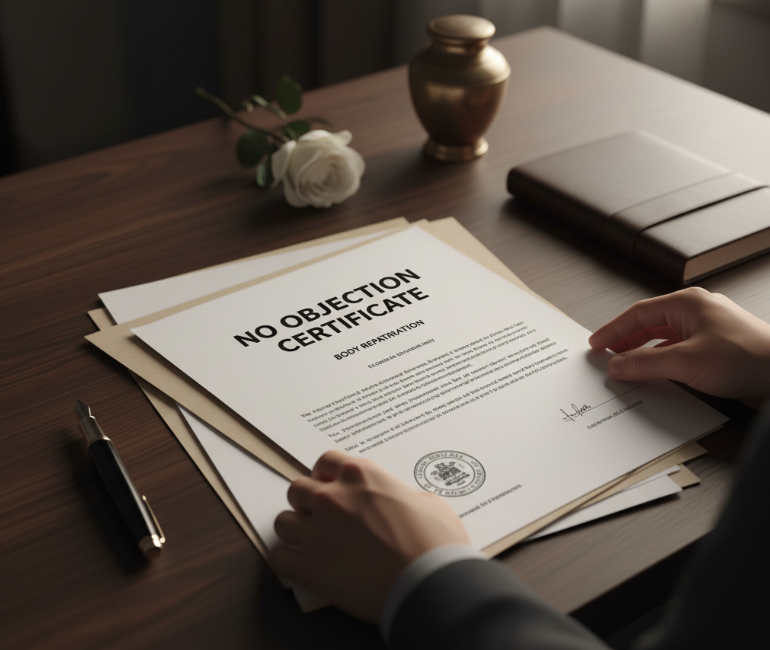
Dealing with the loss of a loved one is deeply challenging, and the process of repatriating a body can feel overwhelming. At Harmony International, we guide you through each step, ensuring the process is smooth and respectful. One of the most crucial legal requirements for body repatriation is obtaining a No Objection Certificate (NOC). Here’s an informative guide to help families understand and navigate this process.
What Is a No Objection Certificate (NOC)?
A No Objection Certificate is an official document issued by your country’s embassy or consulate, granting permission for the deceased’s remains to be transported to another country (such as India). This document assures local and international authorities that all legal, health, and regulatory formalities have been fulfilled, making repatriation lawful and respectful.
Why Is an NOC Required for Body Repatriation?
- Legal clearance: Confirms the cause of death and identity.
- Health & safety: Assures authorities the body is free from infectious diseases and safely embalmed.
- Regulatory compliance: Ensures packaging and transportation meet international standards.
Steps to Obtain an NOC for Body Repatriation
1. Gather Essential Documents
Before applying for the NOC, arrange the following key documents:
- Death Certificate: Issued by a competent authority, clearly stating the cause of death and translated to English if required.
- Embalming Certificate: Confirms the body has been embalmed and is sealed in a hermetically sealed casket, as per international norms.
- Doctor’s Certificate: States that the body is free from infectious diseases.
- Certificate of Packaging: Provided by your undertaker/funeral director, ensuring packaging as per regulation.
- Coroner’s Out of England Order (if applicable): Especially for deaths in the UK, issued by the coroner’s office.
- Passport and ID Proof: The deceased’s original passport (and OCI/PIO card if applicable) for cancellation, plus copies of ID documents.
- Letter from the Funeral Director: Confirms all formalities have been completed and provides contact details for both sender and recipient in India.
- Application Form and Undertaking: Some consulates require a written request from the next of kin or authorized agent, taking responsibility for the repatriation.
2. Submit Application to the Consulate or Embassy
- In-person submission: Most embassies/consulates require that the next of kin or their representative submit documents in person for verification.
- Application review: The embassy ensures all legal, health, and logistical requirements are fulfilled before issuing the NOC.
- Fee Payment: There may be a nominal fee, varying by embassy and citizenship status of the deceased (e.g., Indian or foreign passport holder).
3. Receive the NOC
- Processing Time: Generally, the NOC is processed on the same day or the next working day, though complex cases might take longer.
- NOC Collection: The NOC will be given directly to the applicant or their authorized representative.
4. Additional Clearances and Communication
- Airport and Health Clearances: The NOC will need to be presented at the point of embarkation, and authorities in the receiving country may require further checks based on local regulations.
- Inform Relatives: Keep the recipient family or contacts in the home country informed about arrival date, time, and documentation required for receiving the remains.
Important Tips
- Plan Ahead: Some embassies require appointments; always check in advance.
- Translations: All documents must be in English or with a certified translation.
- Undertaker or Funeral Director: Engaging experienced professionals can ease the process greatly.
Common Questions
Q: Who can apply for the NOC?
A: Usually, the next of kin, close family member, or their legal representative/funeral director.
Q: What if the death was due to an infectious disease?
A: Special certification (from the doctor and health authority) must state that the body is safe for transport.
Q: Do the rules differ by country?
A: Details and local regulations vary, but the essential process is similar worldwide. Always confirm requirements with the respective embassy.
At Harmony International, we are dedicated to supporting you through every step of the repatriation services process. Please contact us for further assistance or for detailed checklists tailored to your situation.
Read more in our Guide to International Repatriation Services.
Pages You Might Like:
 Call us
 Email us